Important: non-surgical only
We offer non-surgical regenerative hair treatments only. We do not offer hair transplant (FUE, FUT or any other hair surgery). If a transplant would suit you better, our doctor will tell you so and you can seek a specialist hair surgeon.
What is regenerative hair loss treatment?
Regenerative hair treatment aims to support weakened hair follicles so they stay in the growth phase longer and produce thicker hair. The main options are:
- PRP (platelet-rich plasma): concentrated platelets from your own blood, injected into thinning areas. See PRP therapy.
- Exosomes: stem cell-derived vesicles applied by injection or microneedling. See exosome therapy.
- Combination programs: regenerative injections plus proven medicines, which is how most studies and specialists use them.
How does it work?
In pattern hair loss (androgenetic alopecia), follicles gradually shrink (“miniaturise”) under the influence of hormones and genetics. Growth factors released by platelets or delivered by exosomes are thought to improve blood supply and prolong the growth (anagen) phase. They do not change the underlying genetic and hormonal drivers, which is why ongoing medical treatment usually remains important.
What does the evidence show?
| Treatment | Evidence level | Notes |
|---|---|---|
| Minoxidil (topical or oral) | Strong | First-line for men and women |
| Finasteride (men) | Strong | First-line for suitable men; prescription needed |
| PRP | Low to moderate | Multiple small randomised trials and meta-analyses show improved density in some patients. PubMed |
| Exosomes | Low | Small pilot studies. PubMed |
| Stem cell-derived conditioned media or micrografts | Low | Small studies; not standardised |
| Low-level laser | Low to moderate | Some trials show modest benefit |
The NHS overview of hair loss explains which types are temporary and which need medical review.
Which types of hair loss may respond?
- Androgenetic alopecia (male or female pattern): the main target of regenerative treatment, particularly early to moderate stages.
- Telogen effluvium (shedding after illness, stress or childbirth): often recovers by itself; the trigger should be addressed first.
- Alopecia areata (patchy, autoimmune): needs dermatology care; regenerative treatment is not standard.
- Scarring alopecias: require specialist diagnosis; regenerative injections are not appropriate as a primary treatment.
Common causes to rule out first
Before any regenerative treatment, it is worth checking for causes that need a different approach. In women especially, thinning can be linked to:
- Iron deficiency or low ferritin.
- Thyroid under- or over-activity.
- Hormonal conditions such as polycystic ovary syndrome.
- Recent childbirth, major illness, surgery, crash dieting or severe stress (often 2 to 3 months earlier).
- Certain medicines.
- Tight hairstyles over a long period (traction alopecia).
Simple blood tests and a careful history often identify these. Treating the cause can allow hair to recover without injections. If you have recent blood test results, include them when you message us.
How will we know if it is working?
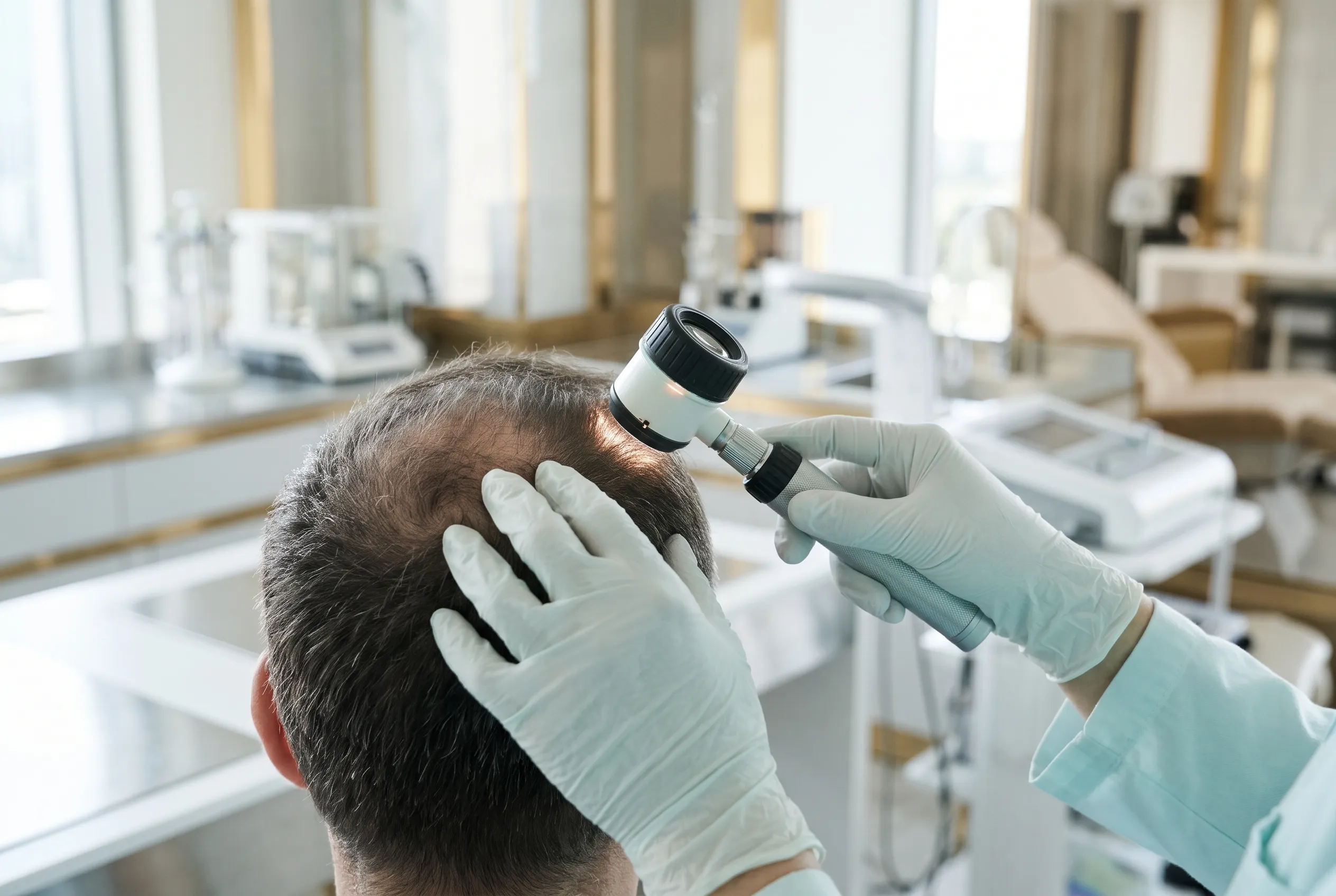
Hair grows slowly, roughly a centimetre a month, and follicles take time to respond. Studies usually judge results at three to six months. We recommend standardised photos before treatment, taken in the same light and position, then repeated at agreed intervals, so you and the doctor can compare objectively. Some clinics also use magnified scalp imaging (trichoscopy) to measure density and hair thickness. If there is no meaningful change after a full course, continuing is unlikely to be worthwhile, and we will tell you so.
Who may be a candidate?
- Men and women with early to moderate pattern thinning.
- People who cannot tolerate or prefer to add to standard medicines.
- People with thinning after a medical cause, such as iron deficiency or thyroid problems, has been checked.
Who should not have regenerative hair treatment?
- Large completely bald areas with no remaining follicles.
- Scalp infection, active psoriasis or dermatitis at the injection site.
- Low platelets, platelet disorders or anticoagulants that cannot be paused.
- Active cancer.
- Pregnancy or breastfeeding.
- Hair loss with an undiagnosed cause, which needs investigation first.
Risks and side effects
Scalp tenderness, mild swelling and headache for a day or two are common. Pinpoint bleeding and temporary shedding can occur. Rare risks include infection and, very rarely, injury to a nerve or vessel. PRP uses your own blood, so allergic reactions are unlikely.
Conventional options first
Most guidelines recommend minoxidil and, for suitable men, finasteride as first-line treatments. Blood tests for iron, thyroid and other causes may be useful, especially in women. Regenerative injections are usually added when these are not enough or not tolerated.
Regenerative hair treatment in Bangkok: step by step
- WhatsApp consultation. Send clear photos of your scalp (top, front, crown) in good light, and any recent blood tests.
- Doctor review. The doctor assesses the likely type of hair loss and whether regenerative treatment is sensible.
- Personalised program. Method, number of sessions, how to fit them around travel, and a written quote.
- Treatment day. Blood draw (for PRP), preparation, numbing, then scalp injections. About one to two hours.
- Aftercare. Avoid washing for several hours, avoid heat and strenuous exercise for a day. See aftercare.
- Follow-up. Standardised photos on WhatsApp at intervals; maintenance can sometimes be done closer to home.
Because programs usually need several sessions a month apart, we will plan with you whether one longer stay or repeat visits work better. See how it works.
Safety and quality
Cells and cell-derived products are prepared in ISO 9001:2015-certified partner laboratories. PRP is prepared with sterile, single-use kits. Treatments are performed by Thai Medical Council-licensed doctors.
Related pages
Frequently asked questions
Do you offer hair transplants?
No. We do not offer hair transplant or any hair surgery. Our hair programs are non-surgical only, using regenerative injections alongside standard medical treatment.
Does PRP for hair loss really work?
Several small randomised trials suggest PRP may increase hair count and thickness in androgenetic alopecia, but results vary and study methods differ. It is not effective for every type of hair loss.
How many PRP sessions are needed for hair?
Studies commonly use three to four sessions about one month apart, then maintenance every few months. Your doctor will suggest a schedule based on your pattern of hair loss.
Are exosomes better than PRP for hair?
There is not enough evidence to say. PRP has more published trials. Exosome hair studies are small and early, and product quality varies widely.
Can stem cells regrow hair on a bald scalp?
No current treatment reliably regrows hair on completely bald, shiny scalp where follicles are gone. Regenerative injections aim to support existing, miniaturising follicles.
How much does PRP hair treatment cost?
It depends on the cause of hair loss, the method and the number of sessions. Send scalp photos and any blood test results on WhatsApp for a personalised program and quote.
This page is general information, not medical advice, and does not replace a consultation with your own doctor. Results vary and no treatment outcome can be guaranteed. We are a patient coordination service and may receive a referral fee from partner medical providers. See our medical disclaimer and referral disclosure.