What is PRP therapy?
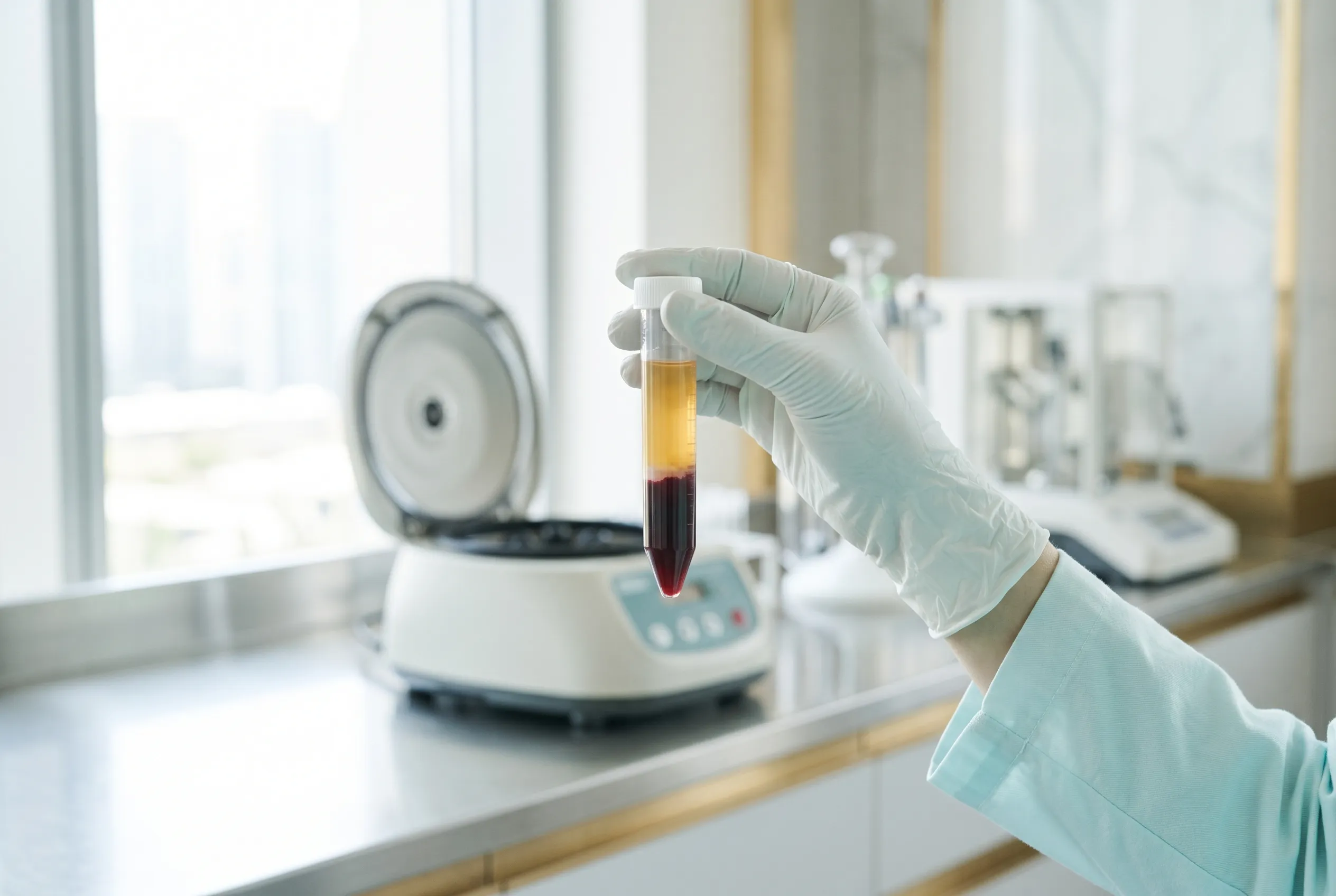
Platelet-rich plasma (PRP) is made from a small sample of your own blood. The blood is spun in a centrifuge so the platelets separate from red cells. The platelet-rich layer is collected and injected into the treatment area. Platelets contain growth factors, such as PDGF, TGF-beta and VEGF, that play a role in normal healing.
Because PRP is autologous (from your own body), it avoids donor-related risks and is widely used in sports medicine, orthopaedics and dermatology. It is often the first regenerative option doctors consider before stem cell therapy.
How does PRP work?
When injected, platelets release growth factors and other signalling proteins over several days. The aim is to:
- Reduce inflammation and pain in an arthritic joint.
- Stimulate healing in a chronically injured tendon that has stalled.
- Support hair follicles in the growth phase.
- Stimulate collagen in the skin.
Preparations vary a lot. Platelet concentration, whether white blood cells are included (“leukocyte-rich” or “leukocyte-poor”) and activation methods all differ between systems, which is one reason study results vary.
Evidence by indication
| Use | Evidence level | Summary |
|---|---|---|
| Knee osteoarthritis | Moderate, mixed | Many trials and meta-analyses suggest PRP may reduce pain more than hyaluronic acid or placebo, but a large Australian trial (RESTORE, JAMA 2021) found no significant benefit over saline. PubMed meta-analyses |
| Tennis elbow | Moderate | Several trials suggest benefit over steroid injection at longer follow-up. PubMed |
| Plantar fasciitis | Moderate | Trials suggest PRP may be comparable to or better than steroid over time. |
| Rotator cuff tear | Mixed | Mostly studied as an add-on to surgery. |
| Androgenetic hair loss | Low to moderate | Small randomised trials show increased hair density in some patients. PubMed |
| Facial rejuvenation | Low | Small studies, often combined with microneedling. |
In the UK, NICE guidance on PRP injections for knee osteoarthritis states there are no major safety concerns but the evidence on efficacy is limited in quality, so it should be used only with special arrangements for clinical governance, consent and audit or research. We share this context so you can weigh the decision honestly.
Who may be a candidate?
- Adults with mild to moderate knee or hip osteoarthritis confirmed on imaging.
- People with chronic tendon problems (elbow, Achilles, plantar fascia, rotator cuff) that have not settled with physiotherapy.
- Men and women with early pattern hair thinning, after a medical cause has been checked.
- People wanting a low-risk biological option before considering stem cells or surgery.
Who should not have PRP?
- Low platelet count or platelet function disorders.
- Active infection at the injection site, or systemic infection.
- Active cancer, especially blood cancers.
- Recent steroid injection into the same area (usually wait several weeks).
- Ongoing anticoagulant or anti-platelet therapy that cannot be safely paused under medical advice.
- Pregnancy.
Non-steroidal anti-inflammatory drugs (NSAIDs) are often paused around treatment, but only with advice from your doctor.
Risks and side effects
Expect pain and swelling at the injection site for two to five days; some people find this flare uncomfortable. Bruising at the blood draw site is common. Rare risks include infection, nerve irritation and, for scalp injections, temporary tenderness or headache. Because PRP uses your own blood, allergic reactions are very rare.
Conventional options first
For knee osteoarthritis, guidelines recommend exercise, weight management, education and simple pain relief first; see the NHS osteoarthritis treatment guide. For tendon problems, a structured loading program with a physiotherapist is the foundation. For hair loss, minoxidil and (for suitable men) finasteride remain first-line. PRP is usually considered when these have not given enough relief.
What to expect after a PRP injection
Most people go back to light daily activity the same day. For joints and tendons, doctors usually advise relative rest for 24 to 48 hours, avoiding heavy loading or running for one to two weeks, then a gradual return guided by a physiotherapy plan. Any benefit typically builds over four to twelve weeks rather than immediately. For scalp and skin, you can usually wash the next day and avoid strong sun and active skincare for a few days.
PRP vs stem cells
PRP is simpler, cheaper to produce and has more trials for tendon problems. Stem cell therapy uses cultured or concentrated cells and is sometimes considered when PRP has not helped or degeneration is more advanced. Read stem cells vs PRP for a side-by-side comparison. Some programs combine the two.
PRP therapy in Bangkok: step by step
- WhatsApp consultation. Tell us where the problem is and what you have tried.
- Send your MRI, X-ray or ultrasound report (for joints and tendons) or clear photos (for hair or skin).
- Doctor review. A doctor assesses whether PRP, another option or no treatment is the most sensible path.
- Personalised program. Number of sessions, spacing, imaging guidance and a written quote.
- Treatment day. Blood draw, preparation (around 20 to 40 minutes), then ultrasound-guided injection where appropriate.
- Follow-up. Activity guidance, a return-to-exercise plan and WhatsApp check-ins. See aftercare.
Because hair and some tendon programs need repeat sessions spaced weeks apart, we will help you plan whether this fits one trip or more. See how it works.
Safety and quality
PRP is prepared at the point of care using closed, sterile, single-use kits. Where PRP is combined with cell-based products, cells are prepared in ISO 9001:2015-certified partner laboratories. Joint and tendon injections are performed by Thai Medical Council-licensed doctors, using ultrasound guidance where this improves accuracy.
Related pages
Frequently asked questions
How many PRP injections are needed?
For knees and tendons, programs commonly use one to three injections a few weeks apart. For hair, studies often use three monthly sessions followed by maintenance. The exact plan depends on your diagnosis and the doctor's review.
How long does PRP last for knee pain?
Trials that report benefit usually measure it at 6 to 12 months. Some people need repeat injections; others notice little effect. PRP does not stop osteoarthritis from progressing.
Is PRP better than cortisone injections?
Cortisone often works faster but its effect tends to fade within weeks. Some trials suggest PRP may give longer-lasting relief for knee osteoarthritis and tennis elbow, but results are mixed and not all studies agree.
Is PRP safe?
Because PRP comes from your own blood, allergic reactions are very unlikely. Short-term pain and swelling are common. Infection is rare when sterile technique is used.
What does PRP cost in Bangkok?
Cost depends on the area, number of sessions and whether imaging guidance is needed. Send your MRI or reports on WhatsApp for a personalised program and written quote.
Does PRP work for hair loss?
Several small randomised trials suggest PRP may increase hair density in androgenetic alopecia, but study methods differ and results vary. It works best alongside standard treatments, not instead of them.
This page is general information, not medical advice, and does not replace a consultation with your own doctor. Results vary and no treatment outcome can be guaranteed. We are a patient coordination service and may receive a referral fee from partner medical providers. See our medical disclaimer and referral disclosure.