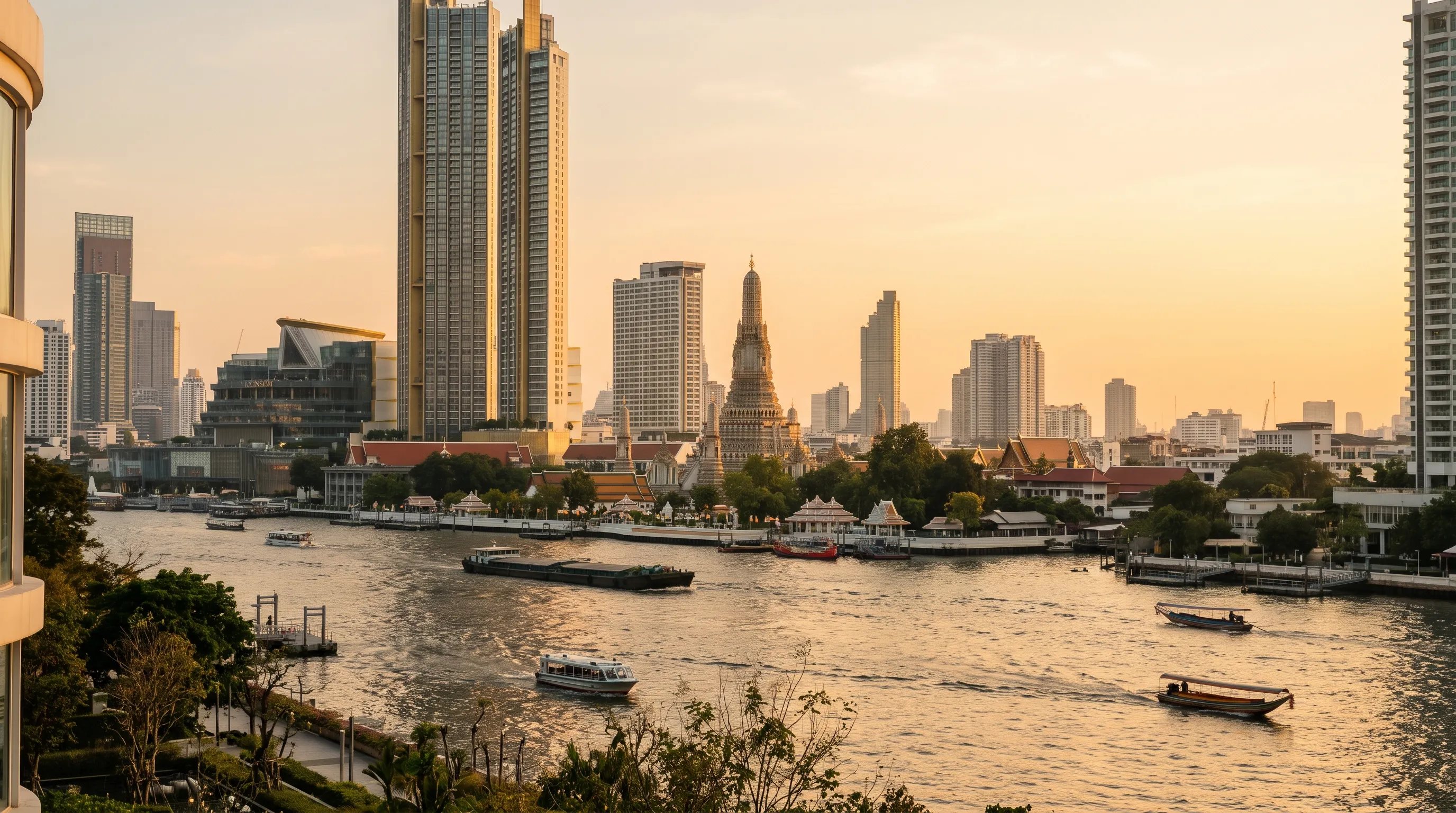
Why Hong Kong residents look to Bangkok
People searching for stem cell therapy in Hong Kong usually want help with knee or back problems, sports injuries or healthy ageing. They find a high standard of medicine locally, but also strict controls on cell therapies — introduced after serious safety incidents in the past — and limited elective options.
Bangkok is only a short flight away, and many Hong Kong residents already know the city well. This page explains the local rules honestly and how to plan safely if you are considering a regenerative program in Bangkok.
How Hong Kong regulates stem cell therapy
The Department of Health oversees medicines and healthcare facilities. Key points:
- The Pharmacy and Poisons (Amendment) Ordinance 2020 (introduced as a bill in 2019, in force since 1 August 2021) created a category of advanced therapy products (ATPs): gene therapy, somatic cell therapy and tissue-engineered products. These are regulated as pharmaceutical products under Cap. 138 and need registration.
- The Private Healthcare Facilities Ordinance introduced stronger licensing for private clinics and day procedure centres.
- High-risk procedures, including certain blood and cell-based treatments, must be performed under medical supervision in suitable settings.
These rules were partly a response to a serious 2012 incident involving an unregulated cell-based treatment at a beauty centre. They put patient safety first, but they mean regenerative stem cell options for joints, spine or ageing are limited.
What is available in Hong Kong vs Bangkok
| In Hong Kong | In Bangkok (our clinic) | |
|---|---|---|
| Blood stem cell transplants | Yes, in public and private hospitals | Not our focus |
| Stem cell injections for joints, spine | Limited; ATP registration required | Doctor-supervised programs after MRI review |
| PRP injections | Available in private clinics | Available, often combined with rehab |
| Longevity / NAD+ programs | Some private clinics | Structured programs with screening |
| Clinical trials | Through university hospitals | Not a trial setting |
Read our main stem cell therapy page.
What the evidence says
Mesenchymal stem cell injections for knee osteoarthritis and some tendon and spine conditions have been studied in small trials. Some suggest improvements in pain and function, but results are mixed and long-term data are limited. Cells do not reliably regrow cartilage, and no provider can guarantee results. The ISSCR resource A Closer Look at Stem Cells offers a useful checklist.
Flights from Hong Kong to Bangkok
| From | To | Typical time |
|---|---|---|
| Hong Kong (HKG) | Suvarnabhumi (BKK) | about 2.5–3 hours |
| Hong Kong (HKG) | Don Mueang (DMK) | about 2.5–3 hours (mainly low-cost carriers) |
Full-service and low-cost airlines fly many times a day. Suvarnabhumi is usually the more convenient airport for central Bangkok. Residents of Shenzhen and the Greater Bay Area can also fly from Shenzhen or Guangzhou.
Visa and entry rules
Entry rules depend on your passport. HKSAR passport holders have generally been able to enter Thailand visa-exempt for short stays. BN(O), foreign and other passport holders should check the rules for their nationality. Most visitors now complete the online Thailand Digital Arrival Card (TDAC) before arrival.
Check the official Thai e-Visa website and the Royal Thai Consulate-General in Hong Kong before you travel. Your passport should have at least six months’ validity.
Insurance and medical records
- The public system and Voluntary Health Insurance Scheme (VHIS) plans focus on treatment in Hong Kong.
- Elective, regenerative or experimental treatment abroad is usually excluded.
- Some international plans include overseas treatment — check in writing.
- Travel insurance generally excludes planned medical treatment.
If you have been treated by the Hospital Authority, you can access some records through the HA Go app or the eHealth system; ask your doctor for imaging reports and letters.
Getting an MRI in Hong Kong and sending it to us
Public MRI waits can be long, while private hospitals and imaging centres offer faster scans with a doctor’s referral. Ask for:
- The radiologist’s report.
- The images (download link or DICOM disc).
Send them on WhatsApp for a free doctor review. We will tell you honestly if a regenerative program is unlikely to help. See send your MRI.
Follow-up back home
- Share the written treatment summary with your Hong Kong doctor.
- Report fever, spreading redness or worsening pain promptly.
- Continue physiotherapy.
- Send updates on WhatsApp; the short flight makes return reviews easy.
See aftercare.
WhatsApp consults and time zones
Bangkok (UTC+7) is 1 hour behind Hong Kong (UTC+8) all year. Working hours overlap almost completely, so replies are usually quick.
Planning your trip from Hong Kong
Most Hong Kong patients combine treatment with a few days’ leave. A typical plan:
- Send your MRI and reports on WhatsApp for a free doctor review.
- Remote consultation to go through your history, medications (including any blood thinners or supplements) and expectations.
- In-person assessment in Bangkok, with blood tests if needed.
- Treatment and recovery days — keep your schedule light and avoid heavy exercise or deep-tissue massage on the treated area.
- Home rehab plan and scheduled WhatsApp follow-ups, with a return visit only if your doctor recommends it.
Written documents are provided in English. If you prefer to discuss details in Cantonese or Mandarin, let us know in advance so we can see what support is available; a family member can also join calls. Bangkok’s climate is hotter for much of the year than Hong Kong’s winter, so drink plenty of water and plan rest periods in the afternoon.
Who should not travel for treatment
Treatment abroad is not suitable if you have active cancer or infection, are pregnant, have unstable heart disease or uncontrolled diabetes, or symptoms that need urgent surgery. Conventional care comes first. Also see our Singapore guide for another nearby perspective. Read about safety and how it works.
Frequently asked questions
Is stem cell therapy legal in Hong Kong?
Established uses such as blood stem cell transplants are available in hospitals. Since 1 August 2021, under the Pharmacy and Poisons (Amendment) Ordinance 2020, gene therapy and higher-risk cell and tissue therapy products are regulated as advanced therapy products, which limits elective uses.
How long is the flight from Hong Kong to Bangkok?
About 2.5 to 3 hours. Many daily flights operate to Suvarnabhumi (BKK) and some to Don Mueang (DMK).
Do Hong Kong residents need a visa for Thailand?
It depends on your passport. HKSAR passport holders have generally been able to enter visa-exempt for short stays; other passport holders should check rules for their nationality.
Will my Hong Kong insurance cover treatment in Bangkok?
Most local and VHIS plans focus on treatment in Hong Kong and exclude elective or experimental treatment abroad. Some international plans have overseas cover; ask your insurer in writing.
Can I combine treatment with a short trip?
Many programs can be planned around a few days in Bangkok, depending on your diagnosis. Our doctors will advise after reviewing your MRI and reports.
How much does stem cell therapy in Bangkok cost?
It depends on your diagnosis and program. Send your MRI and reports on WhatsApp for a free doctor review and a personalised program.
Is it safe to have cell-based treatment after the 2012 Hong Kong incident?
That incident involved an unregulated blood product prepared without proper controls. Any cell treatment should involve proper diagnosis, licensed doctors and quality-controlled laboratories. Ask how products are prepared and tested.
What should I bring from Hong Kong?
MRI or X-ray reports and images, specialist letters, recent blood tests, a medication and allergy list, and your travel documents. Records from HA Go or private hospitals can usually be downloaded in advance.
This page is general information, not medical advice, and does not replace a consultation with your own doctor. Results vary and no treatment outcome can be guaranteed. We are a patient coordination service and may receive a referral fee from partner medical providers. See our medical disclaimer and referral disclosure.