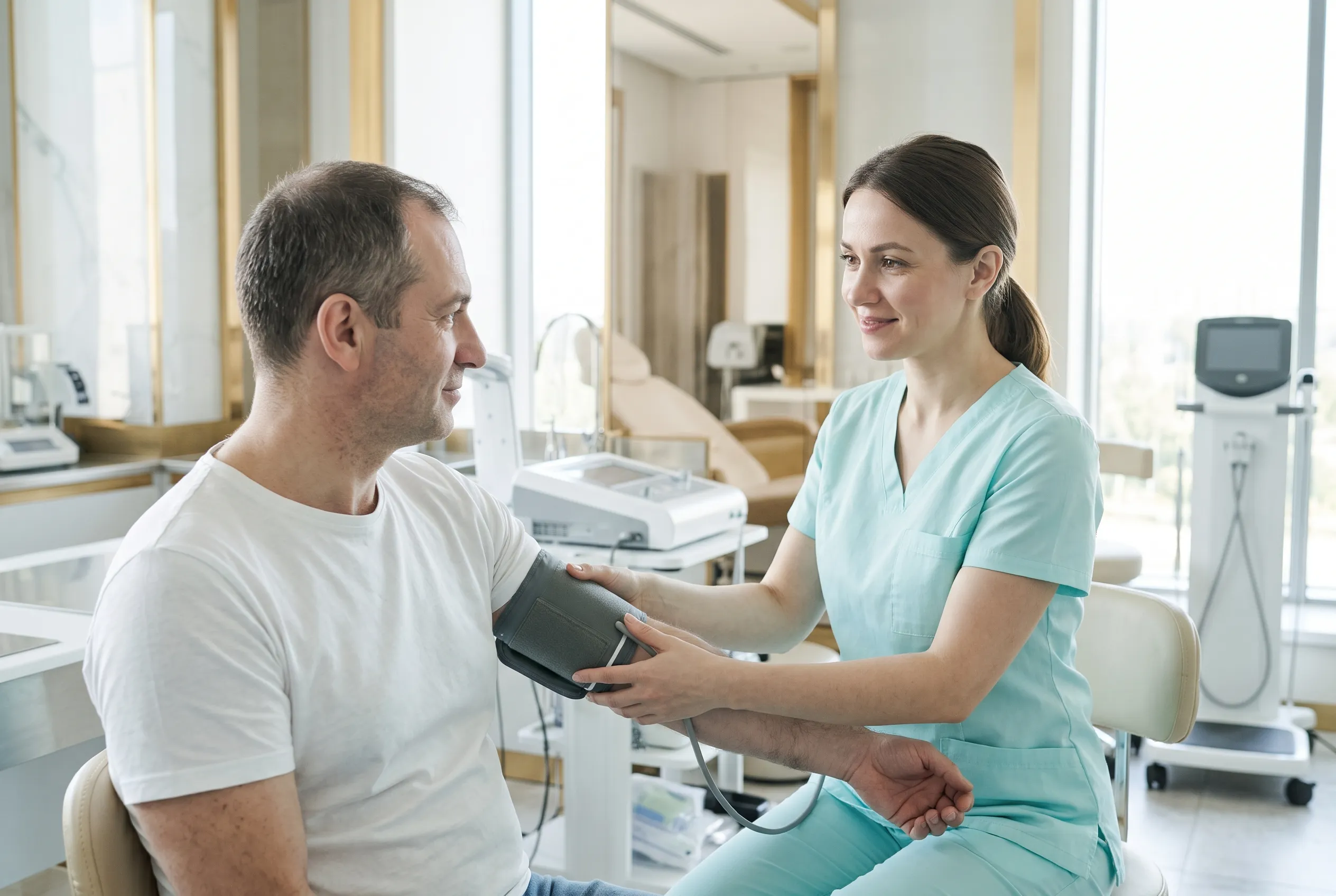
What is a health check up?
A health check up (also called a medical check up or executive health screening) is a planned set of tests in people who usually feel well. The aim is to detect risk factors or early disease while they are easier to treat. Bangkok is a popular place for international patients to do this because hospitals and clinics can usually complete testing and specialist review within a day or two.
A good health check is personal. A 35-year-old with no risk factors needs a very different check from a 60-year-old with a family history of heart disease. We design checks around you rather than selling a fixed package.
Which tests matter, by age?
The table below shows typical considerations. Your doctor will adjust these to your history.
| Area | Typical tests | Who it is usually for |
|---|---|---|
| Heart and circulation | Blood pressure, cholesterol, ECG; exercise test or coronary calcium score in selected people | All adults; more detail from 40s or with risk factors |
| Diabetes | Fasting glucose, HbA1c | All adults, especially with weight, family history or ethnicity risk |
| Kidney and liver | Blood tests, urine test | All adults |
| Bowel cancer | Stool test or colonoscopy | Usually from 45 to 50, earlier with family history |
| Breast cancer | Mammogram, sometimes ultrasound | Women, typically from 40 to 50 depending on guidelines |
| Cervical cancer | HPV test or smear | Women, usually 25 to 65 |
| Prostate | PSA test after discussion of pros and cons | Men from about 50, earlier with risk |
| Lung | Low-dose CT | Long-term heavy smokers in eligible age range |
| Bone health | Bone density scan | Women after menopause, people with risk factors |
| Infections | Hepatitis B and C, HIV, as appropriate | Based on risk and preference |
Independent sources such as the USPSTF screening recommendations and the NHS Health Check guide what is worthwhile.
Why more tests are not always better
Large “head-to-toe” packages can include scans that are not recommended for people without symptoms. These can find harmless “incidentalomas” that cause worry, further scans, radiation exposure and sometimes unnecessary procedures. We aim for a check that is thorough where it matters and avoids tests unlikely to help you.
Adding specialist reviews
Some people use a health check trip to have a specific concern looked at by a specialist at the same time. Common examples include a cardiology review for palpitations or a strong family history of heart disease, a gastroenterology review alongside colonoscopy, or an orthopaedic assessment of a painful knee, hip or back with MRI. If you are wondering about regenerative options for joint or spine pain, you can send your MRI before you travel so the doctor can review it and plan both the check and any orthopaedic consultation in the same visit.
What you take home
At the end you should have:
- A clear written summary in English of every test, with results and reference ranges.
- Copies of imaging reports and, on request, the images on disc or download link.
- A prioritised list of recommendations: what is fine, what to improve, and what needs follow-up.
- A letter that your home doctor can file and act on.
Keeping all results together makes future checks more useful, because trends over time often matter more than a single number.
Who may benefit?
- Adults over 40 who have not had a recent check.
- People with a family history of heart disease, stroke, diabetes or cancer.
- Expatriates or frequent travellers without a regular doctor.
- People starting a longevity program, or considering stem cell therapy or NAD+ IV therapy, who need baseline tests.
- People with existing conditions such as type 2 diabetes or COPD who want a comprehensive review while travelling.
Who should see a doctor urgently instead?
A health check is for people without urgent symptoms. If you have chest pain, sudden breathlessness, unexplained weight loss, blood in stool or urine, a new lump, or neurological symptoms such as weakness or speech problems, see a doctor promptly at home or in an emergency department rather than waiting for a planned check.
Risks of health checks
Blood tests can cause bruising. Some imaging uses radiation (X-ray, CT, mammogram). Colonoscopy has small risks including bleeding and perforation. False-positive results can lead to anxiety and further tests; false-negative results can give false reassurance. We discuss these before you choose.
Health check in Bangkok: step by step
- WhatsApp consultation. Tell us your age, history, medications, family history and goals.
- Send previous results. Recent blood tests, scan reports or previous checks help us avoid repetition. See send your reports.
- Personalised program. A doctor proposes a list of tests with reasons, preparation instructions and a written quote.
- Test day. Arrive fasting in the morning; blood tests, measurements and imaging are done in sequence.
- Results consultation. The doctor explains your results in plain language, usually the same or next day, and gives a written summary.
- Follow-up. Any abnormal findings are referred appropriately. Results can be shared with your home doctor. See aftercare.
Planning tips
- Book your check early in your trip so there is time for any follow-up tests.
- Bring a list of medications, previous results and any specialist letters.
- Allow an extra day if colonoscopy is included.
- Read travel and visa and how it works.
Quality and safety
Tests are performed by accredited hospital or clinic laboratories and imaging departments in Bangkok, and results are reviewed by Thai Medical Council-licensed doctors. Where a program also includes cell-based therapy, cells are prepared in ISO 9001:2015-certified partner laboratories.
Frequently asked questions
How long does a health check in Bangkok take?
Most checks take half a day to a full day, with results reviewed the same or next day. Some tests, such as colonoscopy, need preparation and an extra day.
Do I need to fast before a health check?
Usually yes, for around 8 to 12 hours before blood glucose and cholesterol tests. Water is normally allowed. You will receive specific instructions for your tests.
Are full body MRI scans worth it?
For people without symptoms, whole-body MRI is not recommended by most screening bodies. It often finds harmless abnormalities that lead to further tests. Targeted tests based on your risk are usually more useful.
Will my home doctor accept the results?
You receive written results in English, including laboratory values with reference ranges and imaging reports, which most doctors can use. Bring copies of previous results so trends can be compared.
How much does a health check in Bangkok cost?
It depends on which tests are right for your age and risk. Send your history and any recent results on WhatsApp and our medical team will suggest a personalised program and quote.
This page is general information, not medical advice, and does not replace a consultation with your own doctor. Results vary and no treatment outcome can be guaranteed. We are a patient coordination service and may receive a referral fee from partner medical providers. See our medical disclaimer and referral disclosure.