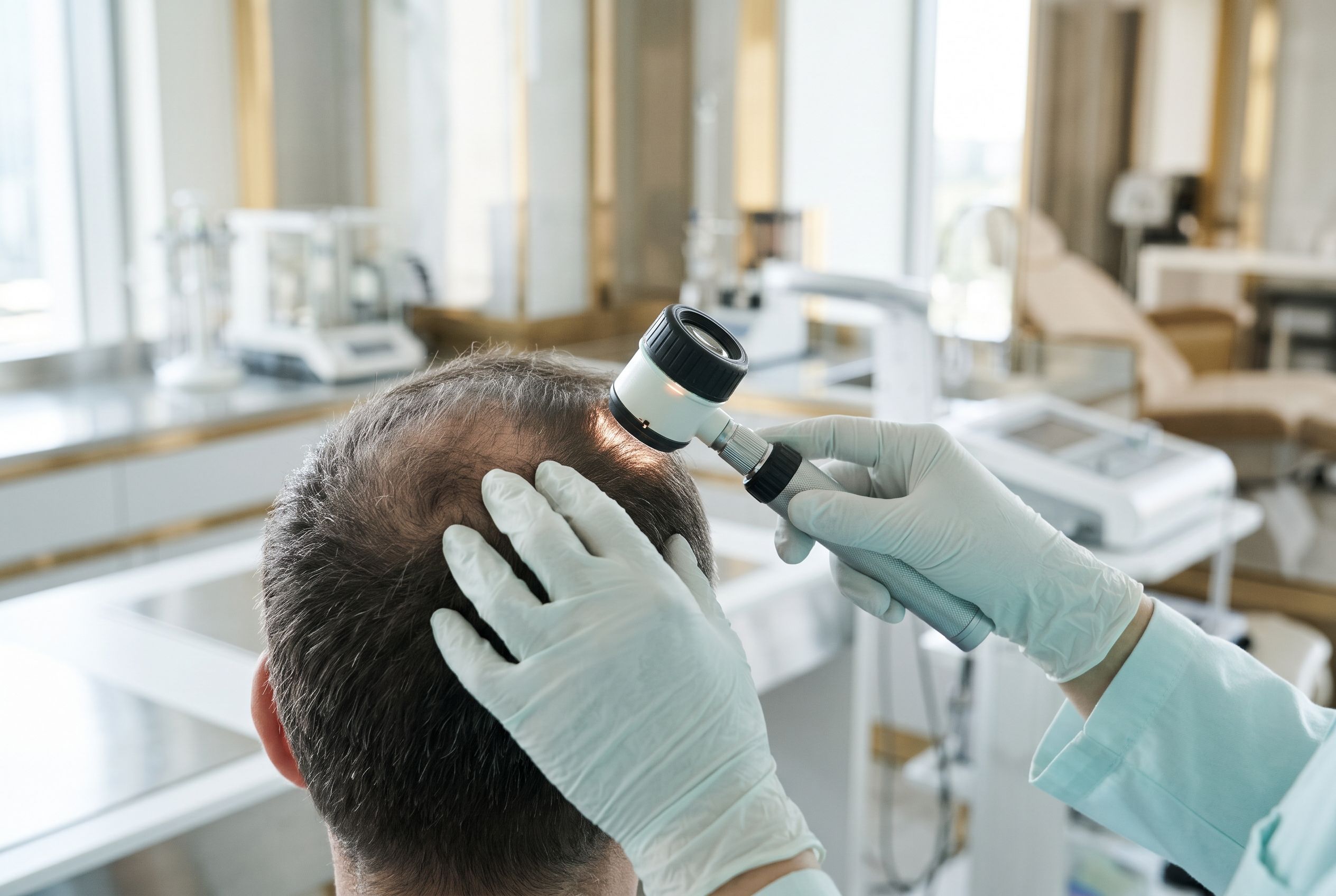
Hair loss treatment in the UK
The NHS hair loss page explains that hair loss is often temporary — after illness, stress, pregnancy or crash dieting — and that male and female pattern hair loss is common and not harmful. It also notes that treatments for pattern hair loss are not usually available on the NHS. That is why so many searches for hair loss treatment in the UK lead to private clinics, many in London.
Private options range from GP and dermatologist consultations to high-street clinics with strong marketing. The first step should always be a proper diagnosis.
Getting a diagnosis
Your GP can check for causes such as:
- Iron deficiency (very common in women)
- Thyroid problems
- Alopecia areata (patchy hair loss)
- Medicines that cause shedding
- Scalp conditions such as psoriasis or fungal infection
A dermatologist may be needed for patchy, scarring or rapidly progressing hair loss. The British Association of Dermatologists publishes patient information on hair loss types.
Conventional options first
| Option | Access in the UK | Evidence |
|---|---|---|
| Topical minoxidil | Pharmacy, no prescription | Good for pattern hair loss |
| Finasteride (men) | Private prescription | Good for male pattern hair loss |
| Low-dose oral minoxidil | Private prescription, off-label | Growing evidence |
| Treating iron or thyroid causes | NHS via your GP | Essential where relevant |
| Wigs and hairpieces | NHS for some medical causes | Practical support |
Where PRP and regenerative scalp care fit
Platelet-rich plasma (PRP) is injected into the scalp to deliver concentrated growth factors from your own blood. Small randomised trials in pattern hair loss suggest modest improvements in density and thickness, usually alongside medicines. Exosome and cell-derived scalp treatments are newer, with early-stage evidence only.
Read more on our regenerative hair loss program, PRP and exosome therapy pages.
We do not offer hair transplants, FUE or any hair surgery.
Who may benefit — and who should not
May suit: early to moderate pattern hair loss, people already using minoxidil or finasteride who want to add PRP, women who prefer to avoid or cannot take some medicines.
Not suitable: scarring alopecia, active scalp infection, platelet or bleeding disorders, some blood-thinning medicines, pregnancy, active cancer.
Risks
Scalp tenderness, mild swelling and pinpoint bleeding are common for a day or two. Headache can occur. Infection is rare. Some people see little or no improvement, and benefits fade without maintenance.
Travelling from the UK
Because PRP has minimal downtime, it can be combined with a short trip. Direct flights from London Heathrow take about 11.5–12 hours. British passport holders have generally been able to enter Thailand visa-exempt for short stays; check the Thai e-Visa site. Protect your scalp from strong sun for a few days. Since maintenance sessions are usually needed, discuss whether some can be done in the UK. See the UK guide and London.
Comparing London clinics with a Bangkok program
If you are comparing a London hair clinic with a Bangkok program, ask both the same questions: who diagnoses you, how PRP is prepared, how many sessions are planned, and how progress is measured with standardised photos. Avoid clinics that guarantee regrowth or push large prepaid packages before a diagnosis. The right choice depends on how often you can travel and whether maintenance sessions are practical.
Women and hair loss
Female pattern hair loss often shows as a widening parting. Iron deficiency, thyroid problems, PCOS and menopause are common contributors that your GP can check. Some medicines used for men are unsuitable for women planning pregnancy.
Follow-up at home
Take photos every few months in the same lighting and position. Continue medicines through your GP or private prescriber. Send photos on WhatsApp for review. See how it works.
Frequently asked questions
Can I get hair loss treatment on the NHS?
The NHS investigates and treats medical causes such as thyroid problems, iron deficiency or alopecia areata. Treatments for male and female pattern hair loss, such as finasteride and minoxidil, are generally not available on the NHS.
What is the most effective non-surgical hair loss treatment?
Minoxidil and, for men, finasteride have the strongest evidence for pattern hair loss. PRP may add modest benefit for some people.
Does PRP for hair work?
Small randomised trials suggest PRP can modestly improve hair density in pattern hair loss, but results vary and repeat sessions are needed.
Do you offer hair transplants?
No. We do not offer hair transplants, FUE or any hair surgery. Our hair programs are non-surgical only.
How much does non-surgical hair loss treatment cost?
It depends on your diagnosis and plan. Send scalp photos and blood tests on WhatsApp for a personalised program.
Is finasteride safe?
Finasteride is licensed for male pattern hair loss and generally well tolerated, but sexual and mood side effects are reported. The MHRA has highlighted possible psychiatric side effects. Discuss risks with your prescriber.
How long before PRP results show?
Usually three to six months. Take standardised photos before treatment and every few months to judge progress fairly.
This page is general information, not medical advice, and does not replace a consultation with your own doctor. Results vary and no treatment outcome can be guaranteed. We are a patient coordination service and may receive a referral fee from partner medical providers. See our medical disclaimer and referral disclosure.