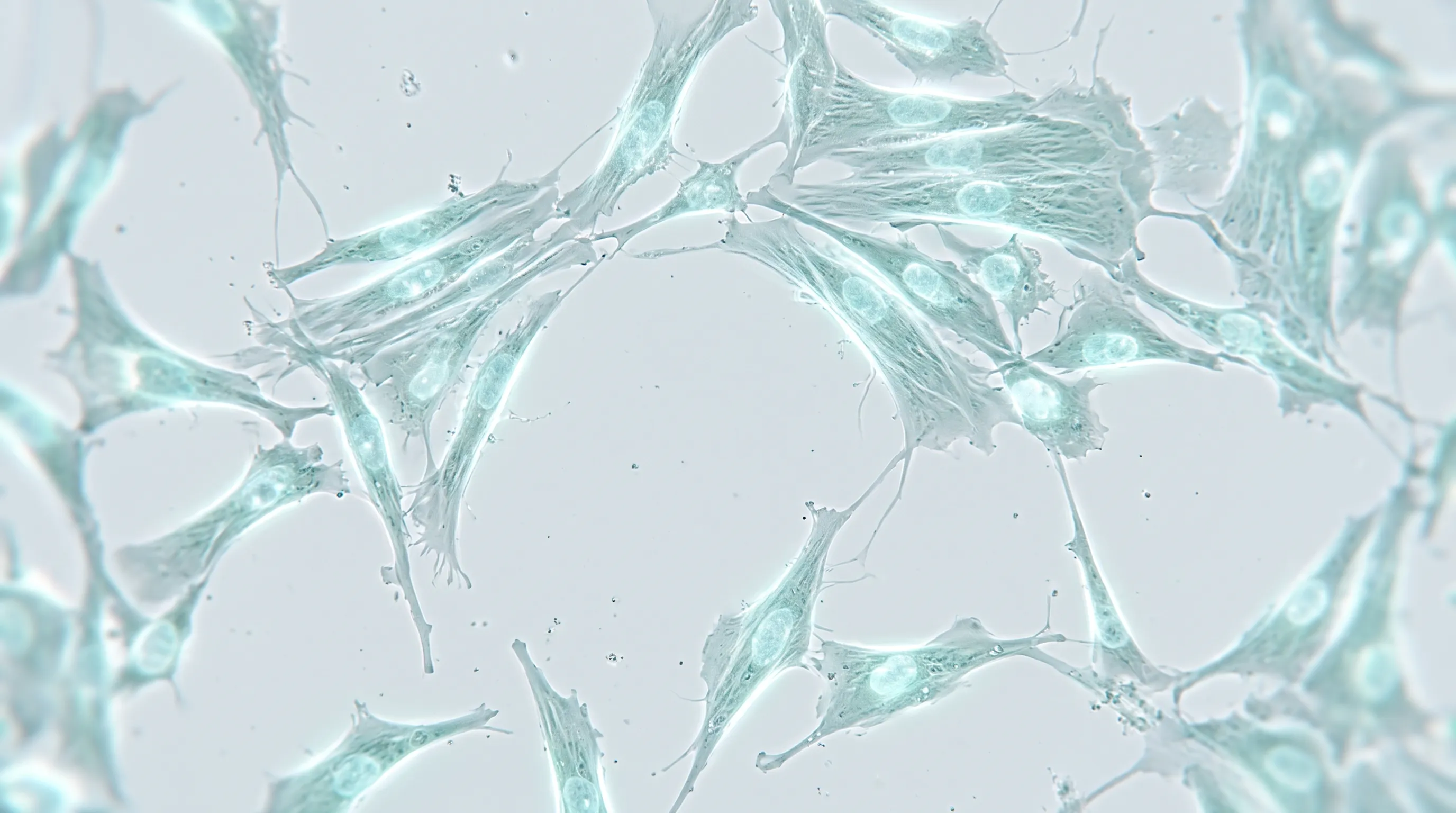
What is stem cell therapy?
Stem cell therapy is a form of regenerative medicine that uses living cells to try to calm inflammation and support the body’s own repair processes. In most private clinics, including ours, the cells used are mesenchymal stromal (stem) cells (MSCs). These cells can be collected from a patient’s own fat or bone marrow (autologous) or from donated umbilical cord tissue (allogeneic), then processed in a laboratory.
This is different from the blood stem cell (haematopoietic) transplants used in hospitals for leukaemia and lymphoma, which are long-established, approved treatments. The US National Institutes of Health has a clear introduction to stem cell basics if you would like the underlying biology.
How does stem cell therapy work?
Early theories suggested injected stem cells would turn into new cartilage or nerve tissue. Current research suggests that is not the main effect. Instead, MSCs appear to work mostly through signalling: they release growth factors, anti-inflammatory molecules and tiny vesicles (exosomes) that influence the cells around them. This is called a “paracrine” effect.
In practice, that means:
- In a joint, the aim is to reduce inflammation and pain and to improve function.
- In a tendon or ligament, the aim is to support a healing environment.
- Through an IV drip, the aim is a broader immune-modulating effect, which is the most experimental use.
Cells do not survive in the body for long, and effects vary a great deal between people.
What does the evidence show by condition?
Evidence quality varies widely. The table below summarises the general state of research as of late 2026. It is not a promise of results.
| Condition | Evidence level | Summary |
|---|---|---|
| Knee osteoarthritis | Moderate, mixed | Several randomised trials and meta-analyses report pain and function improvement; others show results similar to placebo or PRP. PubMed reviews |
| Hip osteoarthritis | Limited | Small case series and early trials only. |
| Rotator cuff tear and tendons | Limited | Mostly as an add-on to surgical repair; small studies. |
| Herniated disc and lower back pain | Early | Small trials of disc injections; results inconsistent. PubMed |
| Multiple sclerosis | Early (MSC) | MSC trials are small. Note: aHSCT, a different hospital procedure, has stronger evidence for some relapsing MS. |
| Parkinson’s disease | Very early | Research stage; no proven benefit from private MSC infusions. |
| COPD | Very early | Small safety trials; no clear lung function benefit shown. |
| Type 2 diabetes | Very early | Experimental; standard medication and lifestyle remain first-line. |
When a condition has only early evidence, we say so plainly during your consultation and may recommend you stay with conventional care.
Who may be a candidate?
You may be a candidate for a doctor review if you:
- Have a confirmed diagnosis with recent imaging (MRI, X-ray or CT) and reports.
- Have tried conventional options such as physiotherapy, weight management, medication or injections, or want to discuss alternatives to surgery.
- Have mild to moderate joint degeneration rather than end-stage “bone on bone” disease.
- Are generally well enough to travel and have realistic expectations.
Who should not have stem cell therapy?
Stem cell treatment is usually not suitable if you have:
- Active cancer or cancer treatment within a period your oncologist considers relevant.
- An active infection, including at the injection site.
- Pregnancy or breastfeeding.
- Uncontrolled bleeding disorders or certain anticoagulant regimens that cannot be safely paused.
- Severe joint collapse or deformity where joint replacement is the more realistic option (see stem cells vs knee replacement).
- Expectations of a cure or guaranteed result.
What are the risks and side effects?
Common, usually short-lived effects include pain, swelling or stiffness at the injection site and, after IV infusion, mild fever, headache or tiredness. Less common but serious risks include infection, allergic reaction and, with unregulated products, contamination. The US FDA has issued warnings about unapproved stem cell products and reported serious injuries from clinics using unsafe preparations. Read our full guide: is stem cell therapy safe?
Conventional options first
For most musculoskeletal problems, guidelines recommend exercise therapy, physiotherapy, weight loss where relevant, pain medication and, sometimes, steroid or hyaluronic acid injections before anything else. The NHS overview of osteoarthritis treatment is a good starting point. Regenerative options are usually considered when these have not helped enough, or when a patient wants to discuss options before surgery.
Stem cell therapy in Bangkok: step by step
- Free consultation on WhatsApp. You tell us your diagnosis, symptoms and goals.
- MRI and report review. You send your MRI, X-rays or reports. A doctor reviews them and tells you honestly whether you may be a candidate.
- Personalised program. If suitable, you receive a written program: cell source, approach (for example ultrasound-guided joint injection or IV), number of treatment days and a clear quote.
- Travel planning. We help with dates, airport transfer and accommodation suggestions. See travel and visa.
- Treatment days in Bangkok. In-person examination, consent, blood tests if needed, then the procedure. Most patients walk out the same day.
- Follow-up. Written aftercare instructions, and check-ins on WhatsApp at agreed intervals, with your home doctor kept informed if you wish.
The full journey is explained on how it works.
Safety and laboratory quality
Cells are prepared in ISO 9001:2015-certified partner laboratories. Each batch is expected to have documentation covering cell source, viability and sterility testing. Ask to see this documentation for your treatment; a legitimate provider will explain it. Procedures are performed by Thai Medical Council-licensed doctors in a clinical setting with sterile technique and, for joints, image guidance. Our checklist on how to choose a stem cell clinic explains what to ask any provider.
Regulatory status in your home country
In the United States, Australia and the United Kingdom, most stem cell therapies for orthopaedic, neurological or anti-ageing use are not approved outside clinical trials. The US FDA, Australia’s TGA and the UK MHRA regulate cell products strictly. That is a key reason some patients travel to Thailand, where licensed doctors may offer treatments under local rules. It also means you should treat this as an evolving area and discuss it with your own doctor.
Related treatments
- Exosome therapy: cell-free signalling vesicles.
- PRP therapy: uses your own platelets; more established for some tendon and knee problems. Compare them in stem cells vs PRP.
- What drives the cost of stem cell therapy.
- Stem cell therapy abroad: a planning guide.
Conditions we are often asked about include sciatica, spinal stenosis, meniscus tear, frozen shoulder and rheumatoid arthritis.
Frequently asked questions
How much does stem cell therapy cost in Bangkok?
There is no fixed price because the cell type, dose, number of sessions and imaging guidance depend on your diagnosis. Send your MRI and reports on WhatsApp and our medical team will design a personalised program with a clear written quote.
Is stem cell therapy approved?
Outside blood stem cell transplants for blood cancers and a few specific products, most stem cell uses are not approved by the FDA, TGA or MHRA. Treatment in Thailand is offered by licensed doctors under Thai regulation, but it remains an evolving, partly experimental field.
How long do stem cell results take?
Studies on knee osteoarthritis usually measure change at 3, 6 and 12 months. Any improvement tends to be gradual over weeks to months, and some people notice little change. No result can be guaranteed.
Are stem cell injections painful?
Most joint injections are done with local anaesthetic and ultrasound guidance and feel similar to a cortisone injection. Mild soreness or swelling for a few days is common. IV infusions feel like a standard drip.
Can stem cells regrow cartilage?
Some small studies report changes on MRI, but there is no consistent proof that injections regrow lost cartilage in adults. Most benefit reported in trials is in pain and function rather than structural regrowth.
How many sessions of stem cell therapy are needed?
Many programs involve one to three treatment days, but this depends on the condition, the area treated and the doctor's assessment of your imaging. Your personalised program states the planned number before you travel.
This page is general information, not medical advice, and does not replace a consultation with your own doctor. Results vary and no treatment outcome can be guaranteed. We are a patient coordination service and may receive a referral fee from partner medical providers. See our medical disclaimer and referral disclosure.