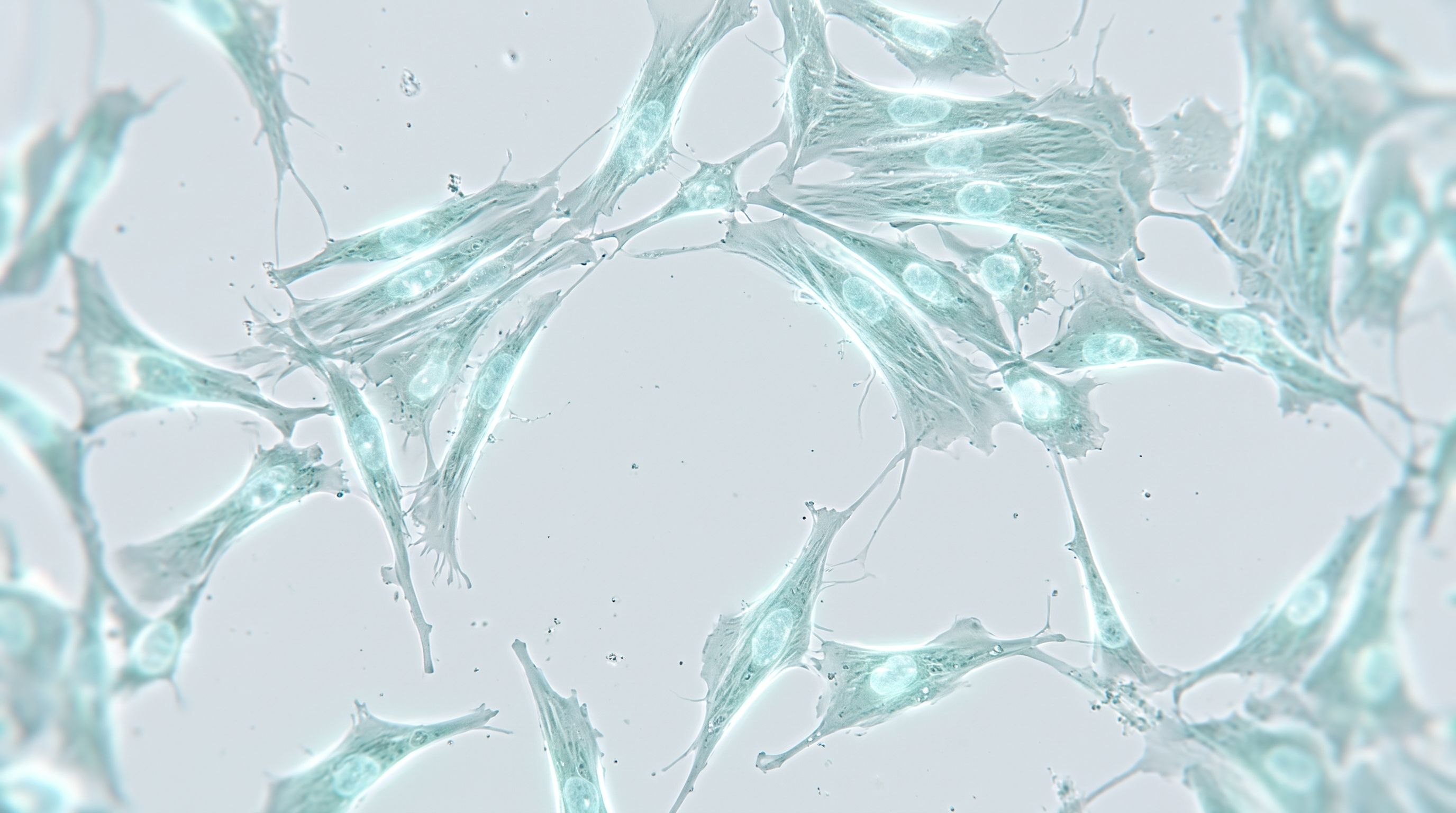
What is regenerative medicine?
Regenerative medicine is the branch of medicine that tries to restore the structure or function of damaged tissue, rather than only relieving symptoms. It covers a wide range, from approved cell and gene therapies used in hospitals to the injection-based treatments offered in private clinics. In a musculoskeletal setting, “regenerative” usually means using biological material, such as concentrated platelets or cells, to calm inflammation and support healing in joints, tendons, ligaments and discs.
The word can oversell what these treatments do. Most current injections are better described as biological pain and function treatments: they may reduce pain and improve movement, but they do not grow a new joint.
What are the main regenerative medicine treatments?
| Treatment | What it is | Typical uses | Evidence level |
|---|---|---|---|
| PRP therapy | Your own blood, spun to concentrate platelets and growth factors | Knee osteoarthritis, tendon problems, some hip and spine pain | Moderate but mixed; many trials of varying quality |
| Stem cell therapy | Mesenchymal stromal cells from fat, bone marrow or umbilical cord tissue | Knee and hip osteoarthritis, cartilage and disc problems | Moderate for knee osteoarthritis; early for most other uses |
| Exosome therapy | Tiny vesicles released by cells, carrying signalling molecules | Joints, skin, hair; mostly experimental | Early; few human trials |
| Prolotherapy | Injection of an irritant solution (often dextrose) to trigger a healing response | Ligament and tendon pain | Limited, mixed |
Our deep guide to stem cell therapy explains cell types, dosing and evidence by condition in more detail. If you are weighing two options, see stem cells vs PRP and exosomes vs stem cells.
How do regenerative treatments work?
Most regenerative injections appear to work by signalling rather than by turning into new tissue. Platelets release growth factors when activated. Mesenchymal stromal cells release anti-inflammatory molecules and exosomes that influence nearby cells. The aim is to shift a joint or tendon from a chronic inflamed state towards a calmer, healing state.
This explains why benefit, when it happens, tends to be gradual over weeks to months and mainly shows up as less pain and better function. Clear structural regrowth of cartilage has not been consistently shown in adults.
What regenerative medicine cannot do
Regenerative injections cannot rebuild a joint that has lost all its cartilage, correct a deformity, or fix a fully torn tendon that has pulled away from bone. They do not reverse ageing or cure chronic disease. Claims of guaranteed results, “cures” or one-size-fits-all packages without imaging review are warning signs.
Which conditions are studied most?
The strongest body of research is in knee osteoarthritis, where randomised trials and meta-analyses of PRP and cell injections report pain and function improvements in some patients, with variable quality (PubMed search of trials). Tendon conditions such as tennis elbow and Achilles tendonitis have been studied mainly with PRP.
Research is earlier for hip osteoarthritis, degenerative disc disease and rotator cuff tears. For neurological, heart and autoimmune conditions, most evidence comes from small or early-phase studies, and these uses should be seen as experimental.
Is regenerative medicine approved?
Regulators separate approved products from unproven ones. The US Food and Drug Administration warns patients about unapproved regenerative medicine products and notes that most stem cell and exosome products marketed for joint, spine or general conditions are not FDA-approved. The UK, Australia and Canada take a similar view.
That is one reason patients travel to countries such as Thailand, where licensed doctors may offer these treatments under local regulation. It does not make the treatments proven. Our page on whether stem cell therapy is safe covers regulation and safety questions in more depth.
Who may be a candidate?
- People with mild to moderate joint arthritis, tendon or ligament problems confirmed on imaging.
- Pain that persists despite exercise therapy, physiotherapy, weight management and standard medicines.
- People who want to delay surgery, or who are not yet surgical candidates.
- People who accept that benefit is uncertain, may be partial and may wear off.
Who should NOT have regenerative injections?
- Active infection, in the joint or elsewhere in the body.
- Active cancer or a recent cancer diagnosis, unless cleared by an oncologist.
- Certain blood disorders, very low platelet counts or uncontrolled bleeding risk.
- Pregnancy.
- Severe, end-stage joint damage where surgery such as joint replacement is clearly the more effective option.
- Uncontrolled diabetes or other unstable medical conditions.
Risks and side effects
The most common effect of any joint or tendon injection is a pain flare and swelling for a few days. Bruising at the needle or harvest site is common when fat or bone marrow is collected. Infection is rare but serious. Donor-cell products carry theoretical risks of immune reaction and depend on careful screening and laboratory standards. Cells are prepared in ISO 9001:2015-certified partner laboratories, and injections are done under ultrasound or fluoroscopic guidance.
The biggest practical risk is spending time and money on a treatment that does not help. A candid assessment of your imaging before treatment is the best protection.
Conventional options come first
Regenerative treatments are not a replacement for proven first-line care. For osteoarthritis, the UK’s NICE guideline recommends exercise, weight management and education as core treatment, with medicines and injections as add-ons. The NHS explains osteoarthritis treatment options and when steroid injections are used. Surgery, including joint replacement, remains the most effective treatment for advanced joint damage. Comparisons such as stem cells vs knee replacement and hip replacement alternatives explain where each fits.
How to find out if regenerative medicine suits you
- Send your MRI, X-ray or reports on WhatsApp.
- A Thai Medical Council-licensed doctor reviews your imaging and history.
- You receive honest advice: conventional care, a regenerative program, or a referral for a surgical opinion.
Read how it works for the full process, or see country guides for patients travelling from Australia, the UK and the US.
Frequently asked questions
What is regenerative medicine in simple terms?
It is medicine that tries to help the body repair damaged tissue rather than only masking symptoms. In everyday clinic practice this usually means injections of PRP, stem cells (mesenchymal stromal cells) or exosomes into joints, tendons or the spine, guided by imaging.
Is regenerative medicine the same as stem cell therapy?
No. Stem cell therapy is one type of regenerative medicine. The field also includes PRP, exosomes, tissue engineering and approved cell and gene therapies used in hospitals. Each has a different level of evidence.
Is regenerative medicine approved?
Some regenerative products are approved, such as certain cell and gene therapies and blood stem cell transplants. Most private stem cell and exosome injections for joint or spine pain are not approved by the FDA, TGA or MHRA. PRP is widely used but its evidence is mixed.
What conditions can regenerative medicine treat?
It is most studied for knee osteoarthritis, tendon problems such as tennis elbow, and some spine and hip conditions. For neurological, heart or autoimmune diseases, research is mostly early-stage and outcomes are uncertain.
How much do regenerative medicine treatments cost?
There is no fixed price because the treatment type, dose and number of sessions depend on your diagnosis. Send your MRI or X-ray on WhatsApp for a free doctor review and a personalised program.
Are regenerative treatments safe?
Injections using your own blood (PRP) or carefully prepared cells are generally well tolerated in studies, with temporary pain and swelling the most common effects. Infection is rare but serious. Unregulated products and poor sterile technique are the main safety concerns.
This page is general information, not medical advice, and does not replace a consultation with your own doctor. Results vary and no treatment outcome can be guaranteed. We are a patient coordination service and may receive a referral fee from partner medical providers. See our medical disclaimer and referral disclosure.