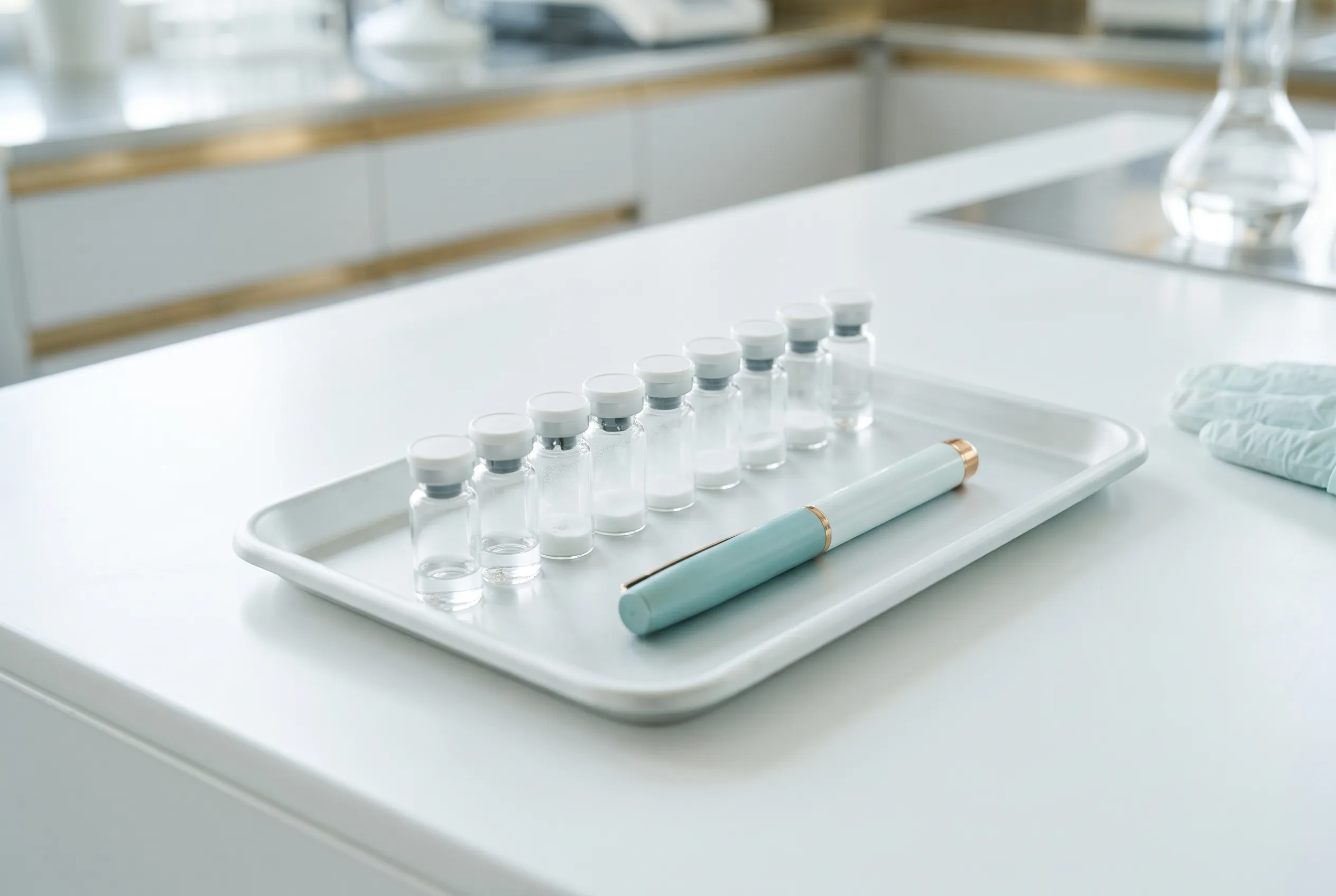
What is peptide therapy?
Peptides are short chains of amino acids, the building blocks of proteins. Your body makes hundreds of them to act as hormones and signals. “Peptide therapy” is a broad term that covers two very different groups:
- Approved peptide medicines. These have passed clinical trials and regulatory review. Examples include insulin, GLP-1 receptor agonists used for diabetes and weight management, and certain bone-building and hormone-related drugs.
- Research or “grey market” peptides. These include BPC-157, TB-500 (a fragment related to thymosin beta-4), various growth hormone secretagogues and many others. They are widely promoted online for healing, muscle, fat loss or anti-ageing, but most have no regulatory approval for human use.
This page is meant to inform. We think patients deserve a clear picture before deciding anything.
How do peptides work?
Each peptide binds to specific receptors and triggers a signal. GLP-1 drugs, for example, act on receptors that affect insulin release, stomach emptying and appetite. BPC-157 is claimed to promote tissue healing through blood vessel growth and growth factor signalling, based mostly on rodent studies. Because each peptide acts differently, it is not accurate to talk about “peptides” as a single therapy with shared benefits or risks.
Evidence by peptide
| Peptide | Regulatory status (US/UK/AU) | Human evidence |
|---|---|---|
| GLP-1 receptor agonists | Approved for diabetes and, some, weight management | Strong, large trials |
| Insulin and other hormone peptides | Approved for specific conditions | Strong |
| BPC-157 | Not approved; FDA has flagged safety concerns for compounding | Very limited; mostly animal studies. PubMed |
| TB-500 / thymosin beta-4 fragments | Not approved | Very limited |
| GHK-Cu (copper peptide) | Cosmetic topical use common; injectable not approved | Small cosmetic studies |
| Growth hormone secretagogues (e.g. ipamorelin, CJC-1295) | Not approved for anti-ageing | Limited; banned in sport |
The US FDA maintains guidance on human drug compounding and has identified several popular peptides, including BPC-157, as bulk substances that may present significant safety risks. The WADA Prohibited List bans many of these peptides in sport.
Why caution matters
Products bought online as “research chemicals” may contain the wrong substance, the wrong dose, or bacterial contamination. Injecting an unregulated product carries a real risk of infection and unknown long-term effects. Some peptides that stimulate growth pathways raise theoretical concerns about cancer growth that have not been ruled out. For these reasons we do not supply research peptides, and we would rather explain why than sell a product without evidence.
Red flags when someone offers you peptides
Peptides are heavily marketed on social media and in gyms. Be cautious if:
- The product is labelled “for research use only” or “not for human consumption” but you are told to inject it.
- There is no prescription, no medical history and no doctor involved.
- You are promised fast healing, fat loss or “reverse ageing” with no mention of side effects.
- The seller cannot give you a certificate of analysis from an independent laboratory.
- Several peptides are “stacked” together with no explanation of why each is needed.
- You are discouraged from telling your own doctor.
These are the same warning signs we describe in our guide on how to choose a stem cell clinic. Good medicine is transparent about what it does not know.
Who might discuss peptide therapy with a doctor?
- People with type 2 diabetes or obesity who may benefit from an approved GLP-1 medicine, prescribed and monitored appropriately. See our type 2 diabetes guide.
- People exploring a structured longevity program who want an evidence-based opinion on what is worth considering and what is not.
- Patients with tendon or joint injuries who want to understand better-studied options, such as PRP therapy or stem cell therapy.
Who should not use unapproved peptides?
- Anyone with a current or past cancer.
- Pregnancy, breastfeeding or trying to conceive.
- Competitive athletes subject to anti-doping rules.
- People with significant heart, kidney or liver disease.
- Anyone who cannot verify the source, purity and sterility of a product.
Risks and side effects
Approved peptides have well-documented side effects; GLP-1 drugs, for example, commonly cause nausea and digestive upset, and need monitoring. For unapproved peptides, reported effects include injection-site reactions, flushing, dizziness, fluid retention and changes in blood sugar, but the real risk profile is unknown because large human studies have not been done.
Conventional foundations first
For healing after injury, physiotherapy and graded loading are the foundation. For body composition and metabolic health, nutrition, resistance training and approved medicines where indicated have the best evidence. For healthy ageing, see our longevity program and NAD+ IV therapy pages for an honest view of what is proven.
How a peptide consultation works in Bangkok
- WhatsApp consultation. Tell us your goals and current medications or supplements, including anything you already inject.
- Send recent blood tests and reports, or arrange a health check in Bangkok.
- Doctor review. A Thai Medical Council-licensed doctor reviews safety and evidence for your situation.
- Personalised program. Where appropriate, this focuses on approved or well-studied options and explains anything that is experimental.
- In-clinic visit. Examination, baseline tests and, if a treatment is agreed, the first dose under supervision.
- Follow-up. Monitoring plan and WhatsApp check-ins; a letter for your home doctor on request.
See how it works for the full patient journey.
Safety and quality
Any medicine used in our programs must be legally sourced with traceable documentation. Where a program includes cell-based therapy, cells are prepared in ISO 9001:2015-certified partner laboratories. Our editorial policy explains how we decide what to recommend, and our medical disclaimer explains the limits of online information.
Frequently asked questions
Is BPC-157 safe?
Its safety in humans is not established. Almost all research is in animals, there are no approved human products, and online versions are often unregulated. The FDA has raised safety concerns about using it in compounded medicines.
Are peptides legal?
Approved peptide medicines are legal with a prescription. Many research peptides are not approved for human use, and selling them for injection may break medicines laws in the US, UK and Australia. Rules differ by country.
Are peptides banned in sport?
Many are. The World Anti-Doping Agency prohibits non-approved substances, including BPC-157, and growth hormone secretagogues. Competitive athletes should check the WADA Prohibited List before taking any peptide.
Do you offer peptide injections?
We discuss peptides only within a doctor-led program and only where a product is legally available and appropriate for you. We do not sell research peptides, and we will explain clearly when the evidence does not support one.
What is GHK-Cu used for?
GHK-Cu is a copper peptide mainly used in topical skincare. Some laboratory and small cosmetic studies suggest effects on collagen and skin repair. Evidence for injected GHK-Cu in humans is very limited.
This page is general information, not medical advice, and does not replace a consultation with your own doctor. Results vary and no treatment outcome can be guaranteed. We are a patient coordination service and may receive a referral fee from partner medical providers. See our medical disclaimer and referral disclosure.