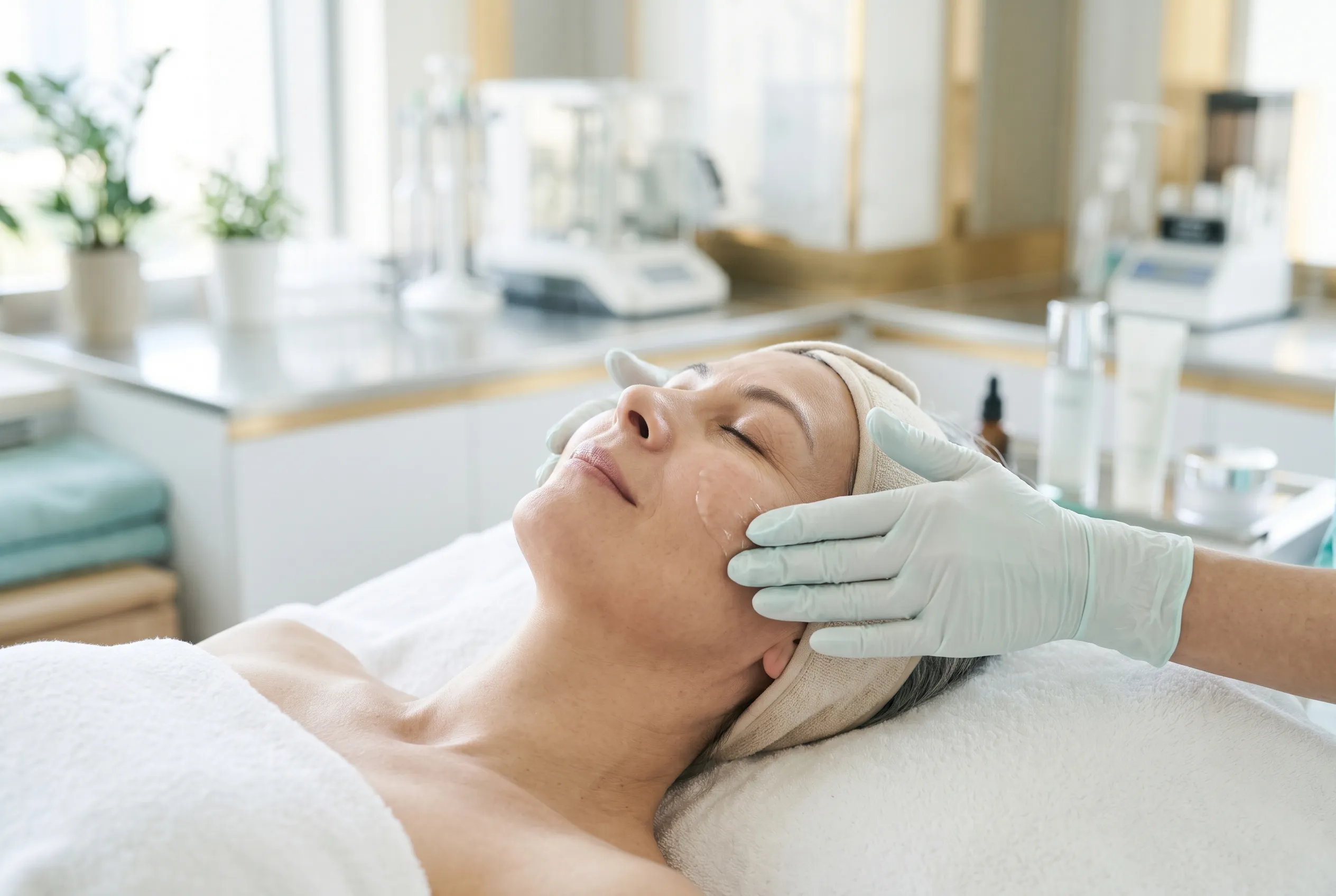
What is a stem cell facial?
“Stem cell facial” is a marketing term rather than a medical one, so it can mean different things at different clinics. In most cases it describes a treatment where a regenerative product is applied to or into the skin to support repair and collagen production. The products commonly used are:
- Exosomes: cell-free vesicles from cultured mesenchymal stem cells. See exosome therapy.
- Stem cell conditioned media: the fluid in which stem cells were grown, containing growth factors.
- Platelet-rich plasma (PRP): from your own blood, often called a “vampire facial”. See PRP therapy.
These are usually combined with microneedling (fine needles create micro-channels in the skin) or a fractional laser, which helps the product penetrate and itself triggers a healing response.
How does it work?
Controlled micro-injury from microneedling or laser starts the skin’s natural wound-healing cascade: inflammation, new collagen and elastin production, and remodelling over weeks to months. Regenerative products are thought to support and possibly speed this process by delivering growth factors and signalling molecules. The aim is gradual improvement in texture, tone and fine lines, not an instant lift.
What does the evidence show?
| Concern | Evidence level | Notes |
|---|---|---|
| Acne scars | Low to moderate | Several small trials of microneedling plus PRP or stem cell-derived products show improvement over microneedling alone. PubMed |
| Fine lines and texture | Low | Small pilot and split-face studies. PubMed |
| Pigmentation | Low | Limited data; results variable. |
| Healing after laser | Low to moderate | Some studies suggest faster recovery with growth factor or exosome products. |
| Deep wrinkles and sagging | Not effective alone | Volume loss and laxity need other approaches. |
Much of the research involves small groups and short follow-up. We will tell you if your concern is better addressed with a well-established treatment.
Who may be a candidate?
- Adults with dull skin, enlarged pores, fine lines or early ageing changes.
- People with atrophic acne scars who want a lower-downtime option.
- Those wanting to combine a skin treatment with another program during a trip to Bangkok.
- People prepared for a series of sessions and gradual results.
Who should not have a stem cell facial?
- Active acne breakouts, rosacea flare, eczema, psoriasis or infection in the area.
- Cold sores (herpes simplex) without preventive medicine.
- Recent isotretinoin use (doctors typically advise waiting several months).
- Pregnancy or breastfeeding.
- Tendency to keloid scarring.
- Skin cancer or suspicious lesions in the treatment area; these need assessment first.
Risks and side effects
Common: redness, warmth, pinpoint bleeding during treatment, mild swelling, dryness and flaking for a few days. Less common: acne-like breakouts, temporary darkening of the skin (post-inflammatory hyperpigmentation), especially in darker skin types, and cold sore reactivation. Rare: infection or allergic reaction. Using sterile, clinical-grade products and single-use needles reduces these risks. Products should never be homemade or from unverified online sellers.
Conventional options first
The foundations of skin ageing care have strong evidence: daily broad-spectrum sunscreen, not smoking, and topical retinoids. For established wrinkles, volume loss or sagging, treatments such as laser resurfacing, injectables or energy-based tightening may be more effective. The NHS has a useful overview of cosmetic procedures and what to check before choosing one.
Stem cell facial vs PRP facial vs exosome facial
| PRP facial | Exosome facial | Stem cell conditioned media | |
|---|---|---|---|
| Source | Your own blood | Lab-cultured stem cell vesicles | Lab-cultured stem cell culture fluid |
| Blood draw needed | Yes | No | No |
| Consistency between sessions | Varies with your blood | Depends on product quality | Depends on product quality |
| Research volume | Most studied of the three | Growing but early | Limited |
Timing your facial around travel
Because skin is red and sensitive for a few days after treatment, plan your session early in your trip rather than the day before a long flight. Avoid beaches, pools and strong sun for at least several days afterwards, which in Bangkok’s climate means wearing a hat and high-SPF sunscreen even on short trips outdoors. If you are combining a facial with another procedure, such as a joint injection or under-eye rejuvenation, the doctor will sequence them so recovery periods do not overlap awkwardly.
Stem cell facial in Bangkok: step by step
- WhatsApp consultation. Send clear photos of your face in natural light, without make-up, and describe your concerns and skin history.
- Doctor review. A doctor checks suitability, reviews medications such as isotretinoin or blood thinners, and recommends the most suitable approach.
- Personalised program. Product choice, combination (microneedling or laser), number of sessions and a written quote.
- Treatment day. Cleansing, numbing cream for 30 to 45 minutes, microneedling or laser, product application, calming mask. Allow two to three hours.
- Aftercare. Gentle cleanser, moisturiser and strict sun protection. See aftercare.
- Follow-up. Photo check-ins on WhatsApp; further sessions if planned.
Read how it works and travel and visa to plan your stay.
Safety and quality
Cells and cell-derived products are prepared in ISO 9001:2015-certified partner laboratories. Treatments are carried out by or under the supervision of Thai Medical Council-licensed doctors. Ask to see the product documentation before treatment, and be cautious of any provider who cannot tell you exactly what is being applied to your skin, where it was made and how it was tested.
Related treatments
Frequently asked questions
Does a stem cell facial use real stem cells?
Usually not. Most stem cell facials use products derived from stem cells, such as exosomes or conditioned culture media, or your own PRP. Live cells are rarely applied to the skin. Ask exactly which product is used.
What is the difference between a vampire facial and a stem cell facial?
A vampire facial uses PRP from your own blood with microneedling. A stem cell facial uses stem cell-derived products such as exosomes. Both aim to stimulate collagen; neither has large long-term trials.
How many stem cell facial sessions are needed?
Small studies typically use three sessions about four weeks apart. Your program depends on your skin type, concerns and how much time you have in Bangkok.
What is the downtime after a stem cell facial?
Expect redness and mild swelling for one to three days, sometimes a little flaking. Most people return to normal activities the next day but should avoid sun, make-up and active skincare for a short period.
How much does a stem cell facial cost?
Cost depends on the product, the method and the number of sessions. Send clear photos and your skin history on WhatsApp and our medical team will suggest a personalised program and quote.
This page is general information, not medical advice, and does not replace a consultation with your own doctor. Results vary and no treatment outcome can be guaranteed. We are a patient coordination service and may receive a referral fee from partner medical providers. See our medical disclaimer and referral disclosure.