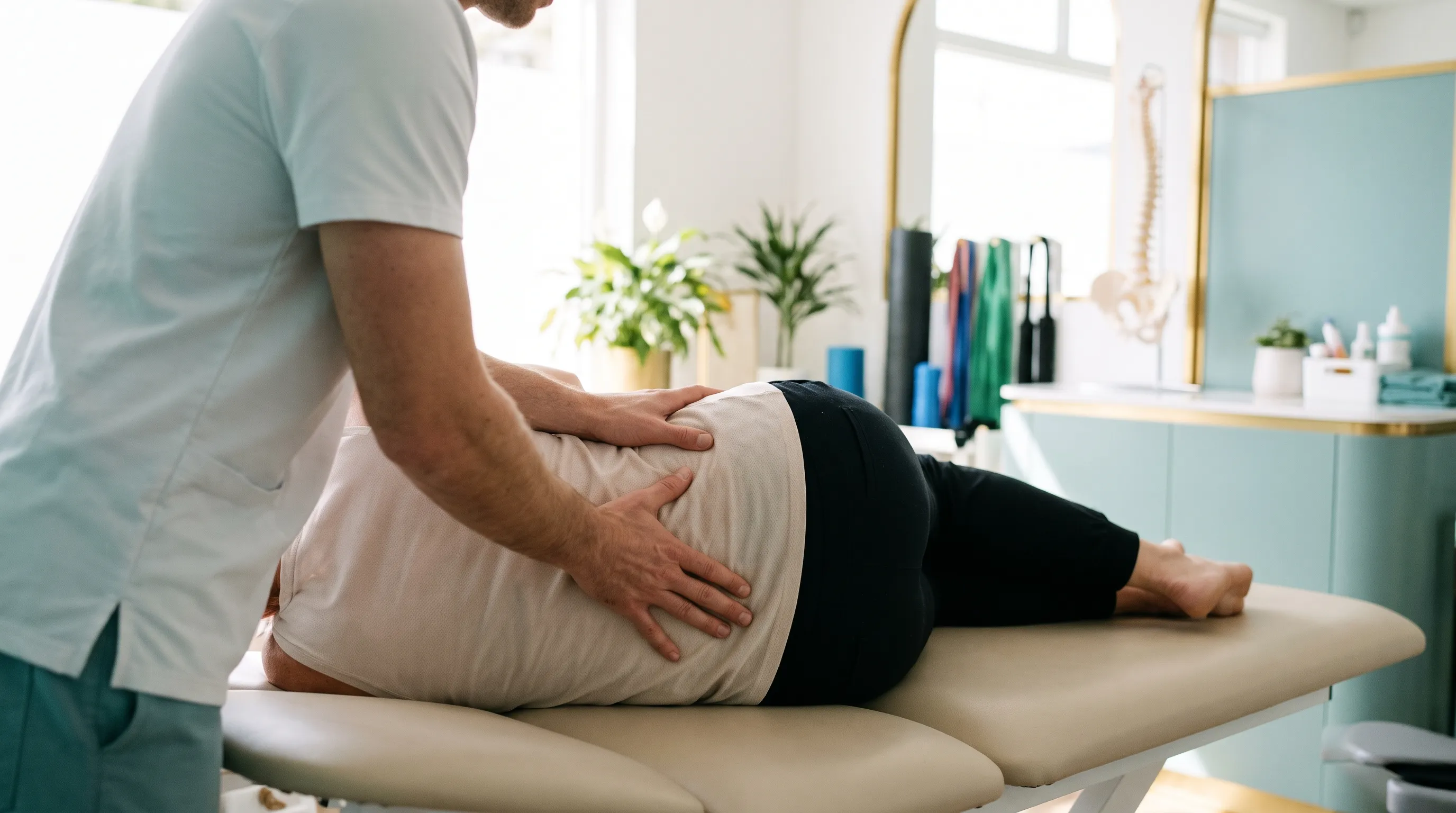
What is lower back pain?
Lower back pain is pain, stiffness or muscle tension between the bottom of the ribs and the top of the legs. It is one of the most common health problems worldwide and a leading cause of time off work. Most episodes are short-lived, but a minority of people develop chronic lower back pain lasting more than three months.
Doctors usually group it into three types:
- Non-specific low back pain: the most common type, where no single structural cause can be reliably identified
- Back pain with nerve root involvement: such as sciatica from a herniated disc or spinal stenosis
- Serious specific causes: such as fracture, infection, inflammatory disease or cancer, which are uncommon but important not to miss
The NHS back pain guide explains what to expect and when to get help.
Causes and risk factors
Potential pain sources include discs, facet joints, the sacroiliac joints, muscles and ligaments. Common contributors are:
- Degenerative disc disease and disc herniation
- Facet joint arthritis
- Sacroiliac joint dysfunction
- Muscle strain from lifting, twisting or sudden movement
- Spondylolisthesis and spinal stenosis
Risk factors include physically demanding or sedentary work, low fitness, excess weight, smoking, poor sleep, stress and low mood. Psychological and social factors strongly influence whether back pain becomes long-lasting.
Diagnosis: when imaging helps
Doctors start by excluding red flags and checking for nerve involvement. For non-specific low back pain, routine imaging is not recommended, because findings like disc bulges and wear are common in people with no pain at all.
Imaging becomes useful when pain persists despite good care, there are nerve symptoms, or a procedure is being considered:
- MRI shows discs, nerves, facet joints and bone marrow changes such as Modic changes, which may be linked to some disc-related pain
- X-rays show alignment, slippage and instability, especially with flexion and extension views
- Diagnostic injections, such as facet or sacroiliac blocks, can help confirm a pain source
If your pain has lasted months and you have imaging, you can send your MRI for a doctor review to see whether a specific, treatable pain source is likely.
Conventional back pain treatment
The UK NICE guideline NG59 offers a clear, evidence-based framework:
- Self-management and staying active. Information and reassurance, with a return to normal activities.
- Exercise. Group or individual exercise programs, such as physical therapy for lower back pain, stretching, strengthening, aerobic exercise, Pilates or yoga.
- Manual therapy and psychological therapy as part of a package that includes exercise, for example cognitive behavioural approaches.
- Medicines. Short-term NSAIDs may be considered. Paracetamol alone is not recommended, and opioids are not recommended for chronic low back pain.
- Radiofrequency denervation for selected people with facet joint pain confirmed by a diagnostic block.
- Surgery for specific causes such as nerve compression or instability. NICE advises against spinal fusion for non-specific low back pain outside research.
Regenerative options: what the evidence says
Regenerative treatments are not first-line and are not approved standard care for back pain in the US, UK or Australia. They may be discussed when a specific pain source has been identified.
- PRP therapy: platelet-rich plasma injected into facet joints, sacroiliac joints or discs. Small trials and case series suggest possible pain improvement, but results are inconsistent. See PubMed research on PRP for low back pain.
- Stem cell therapy: mesenchymal stromal cells injected into painful degenerated discs. Early-phase trials have reported reduced pain for some participants, but placebo-controlled evidence is limited. See PubMed studies on stem cells for discogenic back pain.
- Exosome therapy: mostly laboratory and animal research at this stage.
The US FDA warns about unapproved stem cell therapies. Any credible clinic should explain the evidence and alternatives openly.
Comparing lower back pain treatment options
| Option | Who it suits | Evidence | Main limitation |
|---|---|---|---|
| Exercise and physiotherapy | Almost everyone | Strong | Effect builds over weeks |
| Psychological therapy with exercise | Chronic pain, fear of movement | Moderate | Access varies |
| NSAIDs (short term) | Acute flare-ups | Moderate | Stomach, kidney, heart risks |
| Radiofrequency denervation | Confirmed facet pain | Moderate | Nerves regrow; repeat needed |
| Surgery | Nerve compression, instability | Strong for specific causes | Surgical risks; not for non-specific pain |
| PRP injection | Facet, SI or disc pain | Early | Not standard; variable |
| Stem cell (MSC) injection | Painful degenerated disc | Early-phase trials | Experimental |
Self-help for lower back pain
- Keep moving. Gentle walking and normal activity speed recovery more than rest.
- Build regular exercise. Strength and flexibility work, two or three times a week, reduces flare-ups.
- Sleep and stress matter. Poor sleep and stress amplify pain; good routines help.
- Use heat for muscle spasm, and change position regularly when sitting.
- Stay at or return to work where possible, with adjustments if needed.
Who may be a candidate for regenerative treatment?
- Back pain lasting more than three months despite a full exercise-based program
- An identified likely pain source, such as a degenerated disc, facet or sacroiliac joint, on imaging and examination
- No red flags or progressive neurological symptoms
- Realistic expectations and acceptance of early-stage evidence
Who should not have regenerative treatment
- Back pain with red flags (suspected infection, fracture, cancer or cauda equina syndrome)
- Non-specific pain without an identified source
- Significant spinal instability or severe disc collapse
- Active infection, cancer, bleeding disorders, uncontrolled diabetes or pregnancy
Risks and side effects
Injections can cause temporary pain, stiffness and bruising. Uncommon risks include infection (including disc infection after disc injections), bleeding, nerve irritation and allergic reactions. Long-term safety data for cell therapies in the spine are limited. Cells used in our programmes are prepared in ISO 9001:2015-certified partner laboratories.
What a back pain treatment trip to Bangkok looks like
- Before travel: send your MRI, X-rays and reports on WhatsApp. A doctor reviews whether there is a likely target for treatment, or whether conventional care should come first.
- Day 1: consultation, examination and imaging review; sometimes a diagnostic block.
- Day 2 to 4: image-guided procedure according to the protocol, then rest and monitoring.
- Final days: follow-up check and a rehabilitation plan to continue at home.
Most programmes need about 5 to 10 days in Bangkok. Patients travel from Australia, the UK, the US and Canada. See how it works. Results cannot be guaranteed.
Recovery and aftercare at home
- Avoid heavy lifting and high-impact activity for the first weeks, while keeping up walking
- Follow your graded exercise plan and keep physiotherapy appointments
- Break up long journeys with regular walks
- Report progress and any concerns to the medical team on WhatsApp
- Review results with your doctor over the following months, since any benefit may develop gradually
Fever, new weakness or bladder changes after a procedure need urgent local medical care.
Frequently asked questions
What is the best treatment for lower back pain?
For most people the best treatment is staying active combined with exercise, such as a physiotherapy program, plus short-term pain relief if needed. Psychological approaches that address fear of movement can help long-lasting pain. Specific causes found on imaging may need targeted treatment.
When should I worry about lower back pain?
Seek urgent care if back pain comes with numbness around the genitals or buttocks, bladder or bowel changes, leg weakness, fever, unexplained weight loss, a history of cancer, or after significant trauma. These red flags need prompt investigation.
Do I need an MRI for lower back pain?
Usually not in the first few weeks. Guidelines recommend imaging when red flags are present, when pain persists despite treatment, or when the result would change management, such as before injections or surgery. Many MRI findings, like disc bulges, are common in people without pain.
Can stem cells help chronic back pain?
They may help some people whose pain comes from a degenerated disc, according to small early trials, but results vary and long-term evidence is lacking. Stem cell treatment for back pain is experimental and works only when a likely pain source has been identified.
Is walking good for lower back pain?
Yes. Walking is safe for most people with back pain and supports recovery. A randomised trial in Australia found that a progressive walking program helped reduce recurrence of low back pain.
How much does back pain treatment in Bangkok cost?
It depends on the cause of your back pain, your MRI findings and the program recommended. Send your MRI and reports on WhatsApp for a free doctor review and a personalised program.
This page is general information, not medical advice, and does not replace a consultation with your own doctor. Results vary and no treatment outcome can be guaranteed. We are a patient coordination service and may receive a referral fee from partner medical providers. See our medical disclaimer and referral disclosure.