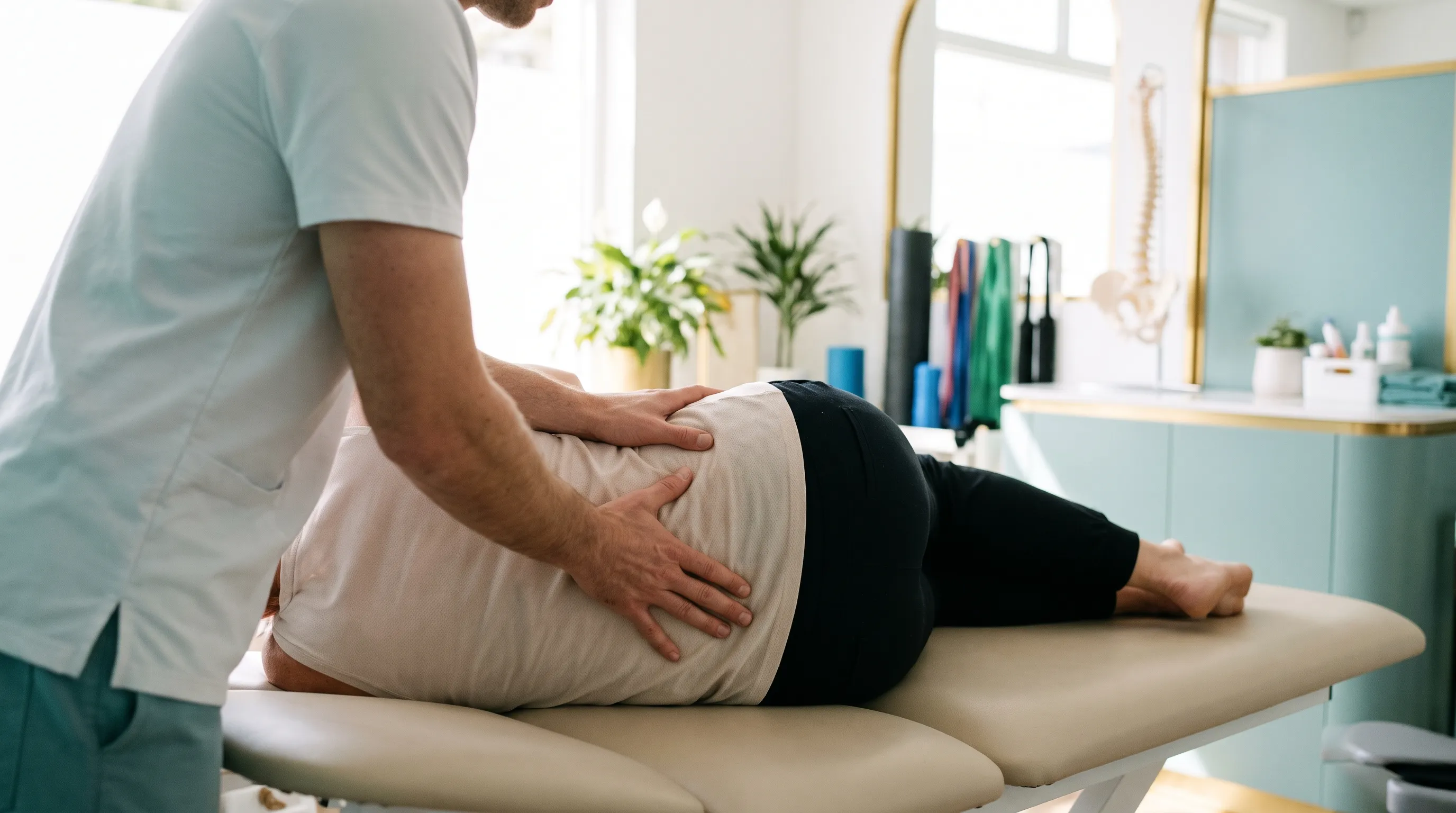
Herniated discs in Australia
A herniated (slipped or prolapsed) disc happens when the soft centre of a spinal disc pushes through its outer layer. In the lower back it can irritate a nerve root and cause sciatica; in the neck, arm pain. Many Australians learn they have a “bulging disc” from a scan, but disc changes are very common in people without pain — the key is whether the findings match your symptoms.
Searches for herniated disc treatment in Australia often come from people with persistent leg or back pain who want to avoid surgery or are waiting to see a spinal surgeon.
Red flags
Seek emergency care for numbness around the groin or buttocks, new bladder or bowel problems, or rapidly worsening leg weakness.
Conventional options first
| Option | Notes |
|---|---|
| Staying active, modified activity | Avoid bed rest |
| Physiotherapy | Graded exercise and education |
| Pain relief | Discuss with your GP; opioids generally avoided long term |
| Nerve root / epidural injection | For severe leg pain in selected cases |
| Microdiscectomy | For persistent severe symptoms or weakness with matching MRI |
The national Low Back Pain Clinical Care Standard encourages avoiding routine imaging unless serious conditions are suspected, and supporting people to stay active.
Where regenerative care may fit
For persistent pain related to a herniated disc or degenerative disc disease without a clear need for surgery, some patients explore stem cell therapy or PRP. Early studies have explored injections into or around discs, with mixed results. These are experimental and, under TGA rules, rarely available in Australia.
Who may be a candidate — and who should not
May suit: symptoms lasting more than 3 months, MRI findings that match symptoms, no red flags, conservative care tried, no urgent need for surgery.
Not suitable: cauda equina symptoms, progressive weakness, large sequestered fragments compressing nerves, infection or tumour, pregnancy, active cancer.
Risks
Spinal injections carry risks of temporary pain flare, headache, infection and, rarely, nerve injury or disc infection. Image guidance and sterile technique are essential. Benefit is not guaranteed.
MRI and Medicare
Medicare rebates for spinal MRI depend on referral rules, usually involving a specialist referral or specific GP-referral criteria. Many Australians pay privately for a faster scan. Ask the practice for the report and an image download link.
Travelling from Australia with a disc problem
Flights take about 9 hours from Sydney and Melbourne and about 7 hours from Perth. Book an aisle seat, stand regularly, use a lumbar support and use luggage trolleys. Allow a rest day after arriving. Australians have generally been able to enter Thailand visa-exempt for short stays; check the Thai e-Visa site. See the Australia guide and Sydney or Brisbane.
Understanding your MRI report
Australian MRI reports often include terms that sound alarming. Common ones:
| Report term | What it usually means |
|---|---|
| Disc bulge | Broad extension beyond the vertebra — very common, often painless |
| Protrusion / extrusion | A focal herniation that may irritate a nerve root |
| Sequestration | A fragment that has separated; may still shrink over time |
| Nerve root contact or compression | The disc is touching or pressing on a nerve — relevant if it matches leg symptoms |
| Disc desiccation | Loss of water content — part of normal ageing |
| Modic changes | Changes in the bone next to the disc; sometimes linked to back pain |
Our doctors compare these findings with your symptoms. A herniation on the left side, for example, should match left-sided leg pain. If the scan and symptoms do not match, injecting the disc is unlikely to help, and we will tell you.
Because herniations often shrink naturally, a repeat MRI after some months may show improvement. If your pain is improving, it is usually best to continue conservative care rather than start a new treatment.
Follow-up at home
Continue your exercise programme with a physiotherapist, share your treatment summary with your GP and send updates on WhatsApp. See how it works.
Frequently asked questions
Can a herniated disc heal on its own?
Often, yes. Many disc herniations shrink over weeks to months, and symptoms improve without surgery.
When is surgery needed for a herniated disc?
Surgery is considered for cauda equina syndrome, progressive weakness, or severe leg pain that persists despite conservative care and matches MRI findings.
What is the difference between a bulging and herniated disc?
A bulge extends broadly beyond the vertebra; a herniation is a more focal protrusion of disc material. Both are common on MRI, even in people without pain.
Can stem cells repair a herniated disc?
There is no proven stem cell treatment for disc herniation. Research is early-stage, with small studies and mixed results.
How much does disc treatment in Bangkok cost?
It depends on your MRI findings and program. Send your MRI on WhatsApp for a personalised program.
Can I keep working with a herniated disc?
Many people can, with modified duties. Staying at work or returning early usually helps recovery. Discuss lifting limits with your GP or physiotherapist.
Is microdiscectomy covered by Medicare?
Spinal surgery is available in the public system and partly covered by Medicare and private insurance in private hospitals. Your surgeon can explain costs and waiting times.
This page is general information, not medical advice, and does not replace a consultation with your own doctor. Results vary and no treatment outcome can be guaranteed. We are a patient coordination service and may receive a referral fee from partner medical providers. See our medical disclaimer and referral disclosure.